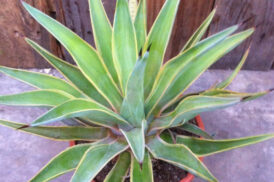
Agave Parryi Truncata – Artichoke Agave
March 13, 2026
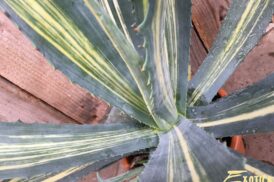
Agave Titanota White Ice
March 13, 2026
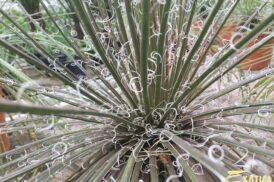
Agave potatorum ‘Eye Scream’ – Butterfly Agave
| Min Temp : | -7°C |
| Pitch: | Sunny |
| Water requirements : | Limited, well-drained |
| Flowering period : | – |
| Scented : | No |
| Edible: | No |
| Use: | Container / Patio plant |
| Evergreen: | Yes |
| Height : | Up to 40cm |
€29.95
Agave potatorum ‘Eye Scream’, also known as variegated butterfly agave, is a compact, variegated cultivar of Agave potatorum with a striking, symmetrical rosette of blue-grey leaves with broad creamy white/cream edges.
Origin
- The basic species Agave potatorum is endemic to Mexico, especially in the semi-arid highlands of Oaxaca and southern Puebla at altitudes of 1200–2400 meters, in dry grasslands, chaparral, and pine-oak forests.
- The cultivar ‘Eye Scream’ is a selected variegated form (with creamy white edges), originated in the modern succulent trade (mentioned from around 2007 by breeders such as Kranti Singh or Plant Delights Nursery); It is not a wild variety but a cultivated selection for ornamental value.
- Named after the striking “ice cream-like” cream edges on the blue-gray leaves; popular in the US and Europe as a rare collector’s plant.
Care
- Grows slowly into a compact, usually solitary rosette about 20–25 cm high and 30–45 cm wide (sometimes up to 50 cm); leaves short and broad (approx. 15 cm long × 7–8 cm), blue-grey with broad cream-white edges, red to dark teeth and a sharp terminal spine.
- Prefers full sun (at least 6 hours of direct light per day); Light partial shade is possible, but full sun gives the best colour contrast and compact growth.
- Plant in very well-drained soil (sandy-gravelly, cactus/succulent mix with perlite or pumice); pH neutral to slightly alkaline; Avoid heavy clay or wet feet (root rot risk).
- Watering: extremely drought tolerant; soak-and-dry method — allowing soil to dry completely between waterings; keep sparingly in summer, almost dry in winter (overwatering is the biggest enemy).
- Winter hardiness: moderate to good (USDA zones 8b–10/11); tolerates frost down to about -6 to -10 °C (sometimes down to -12 °C in dry conditions); in colder climates (such as the Netherlands) as a container plant to overwinter frost-free or mulch heavily.
- Fertilization: little to none; in case of emergency in spring, a low dose of diluted cactus fertilizer; avoid over-fertilization.
- Pruning: remove only dead leaves; Wear gloves and protective clothing.
Usage
- Mainly ornamental plant (ornamental): appreciated for its beautiful symmetrical rosette, blue-grey colour with creamy white edges and compact shape; Perfect for drought-resistant gardens, rock gardens, borders, containers, succulent gardens or as a collector’s item.
- Attracts attention in xeriscape and desert landscapes; after many years (20–30+) produces a tall flowering stem (up to 3–5 m) with yellow flowers; Mother plant dies afterwards.
Related products
-
Agave Desmettiana
€14.95 -
Agave Geminiflora
€49.95