Musella Lasiocarpa (Golden Lotus Banana)
January 3, 2015
Musa St.Helens hybrid (Sikkimensis x Chini-Champa)
January 3, 2015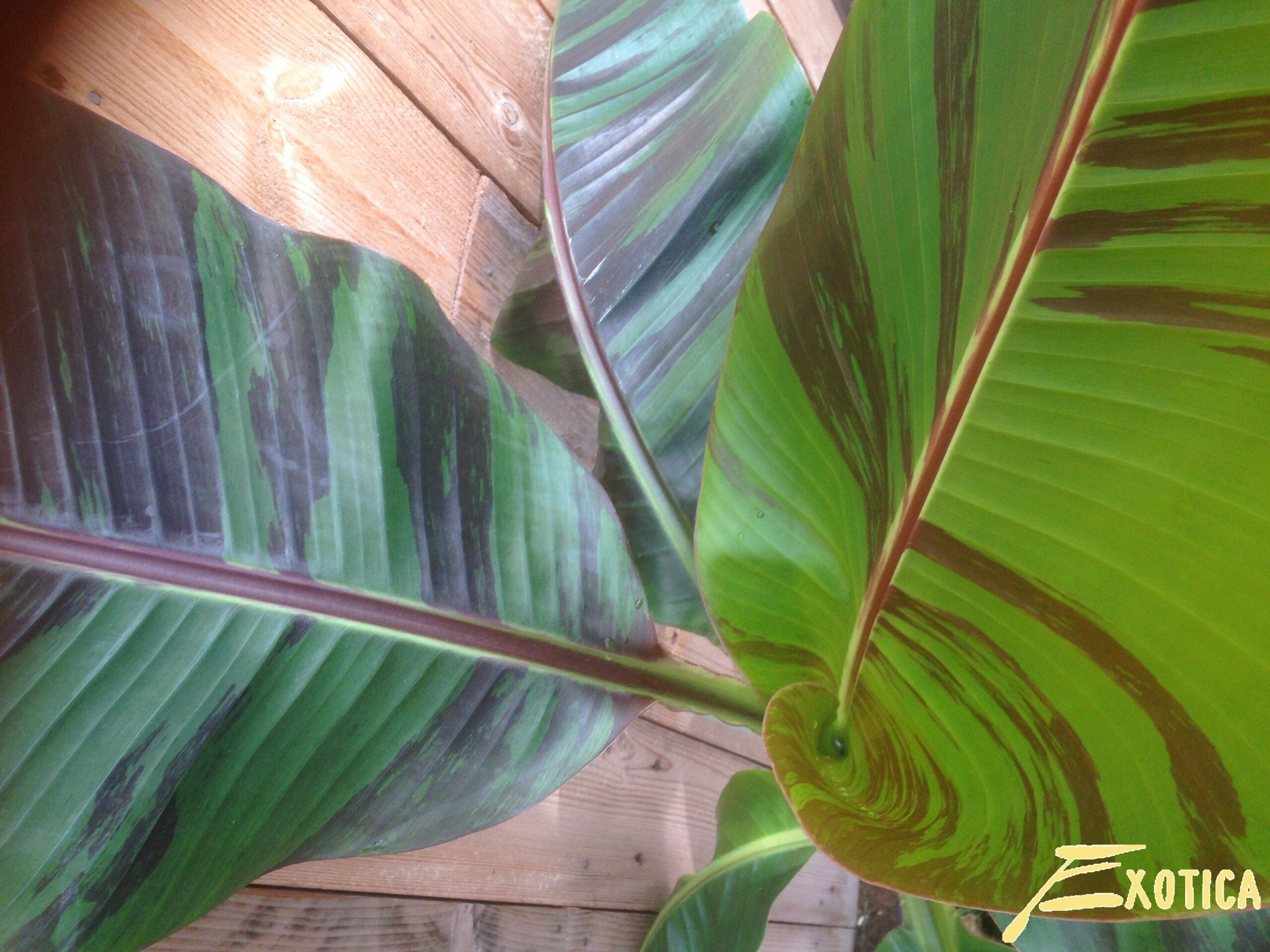

Musa sikkimensis ‘Red Tiger’
Attention! Leaves are partly cut off for transport,
Due to the high growth rate, the size of the plant can vary throughout the year.
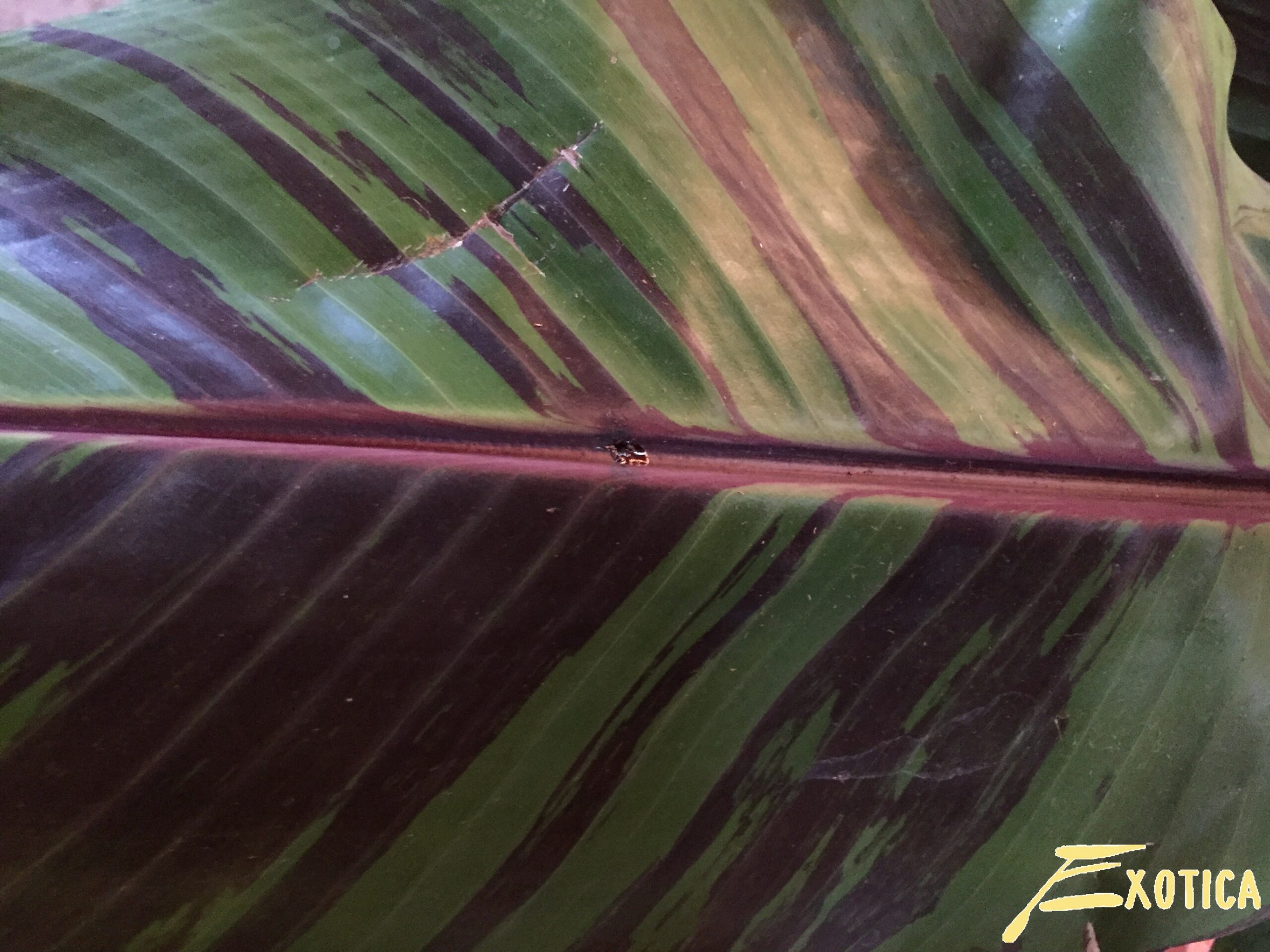
In older/larger plants, the black discoloration in the leaves largely disappears.
| Min Temp : | -12°C |
| Pitch: | Sun / Partial shade |
| Water requirements : | Regular |
| Flowering period : | – |
| Scented : | No |
| Edible: | No |
| Use : | Patio / Container Plant / Open Ground |
| Evergreen: | Yes |
| Height : | Up to 4m |
Price range: €9.95 through €34.95
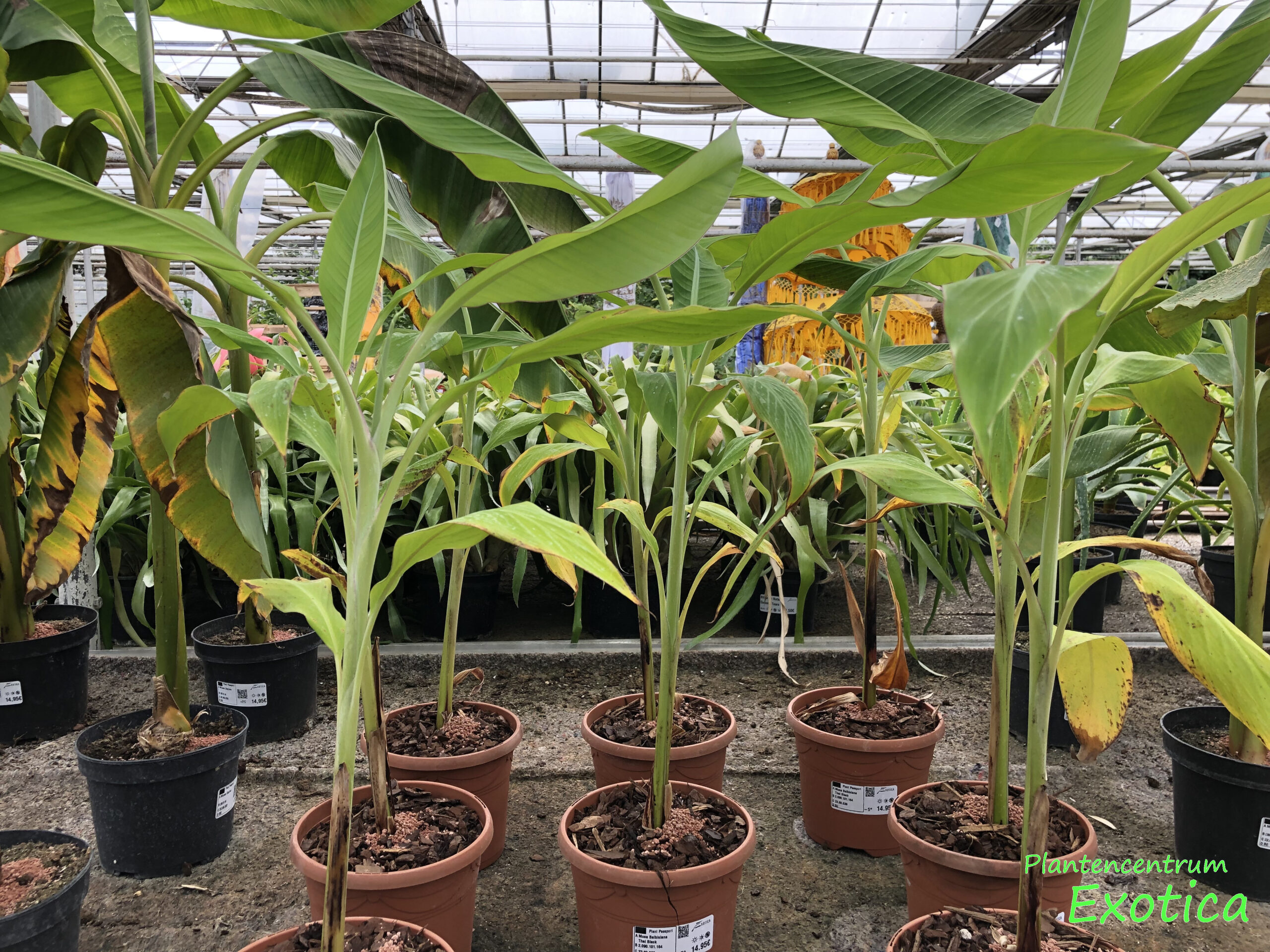
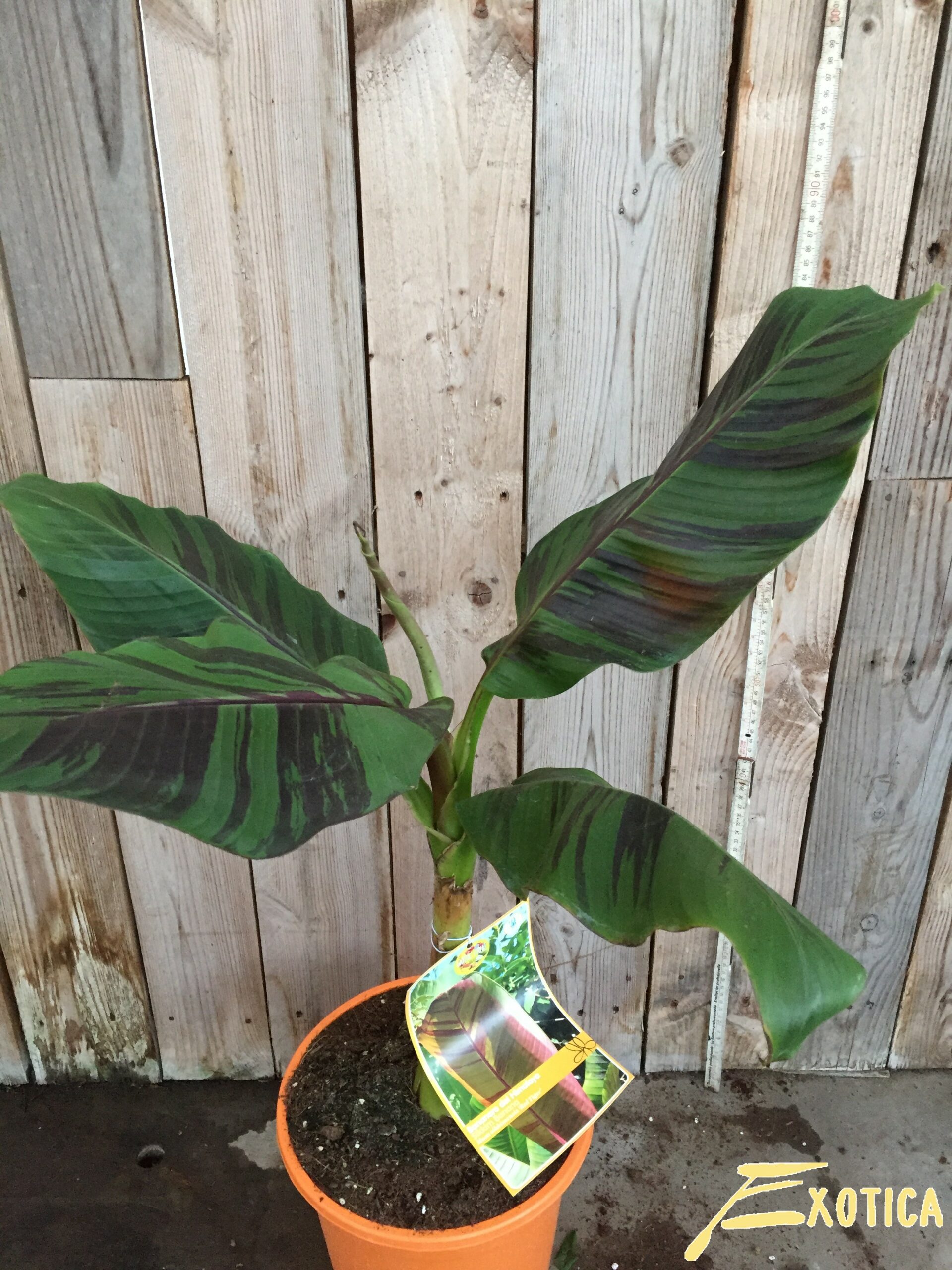
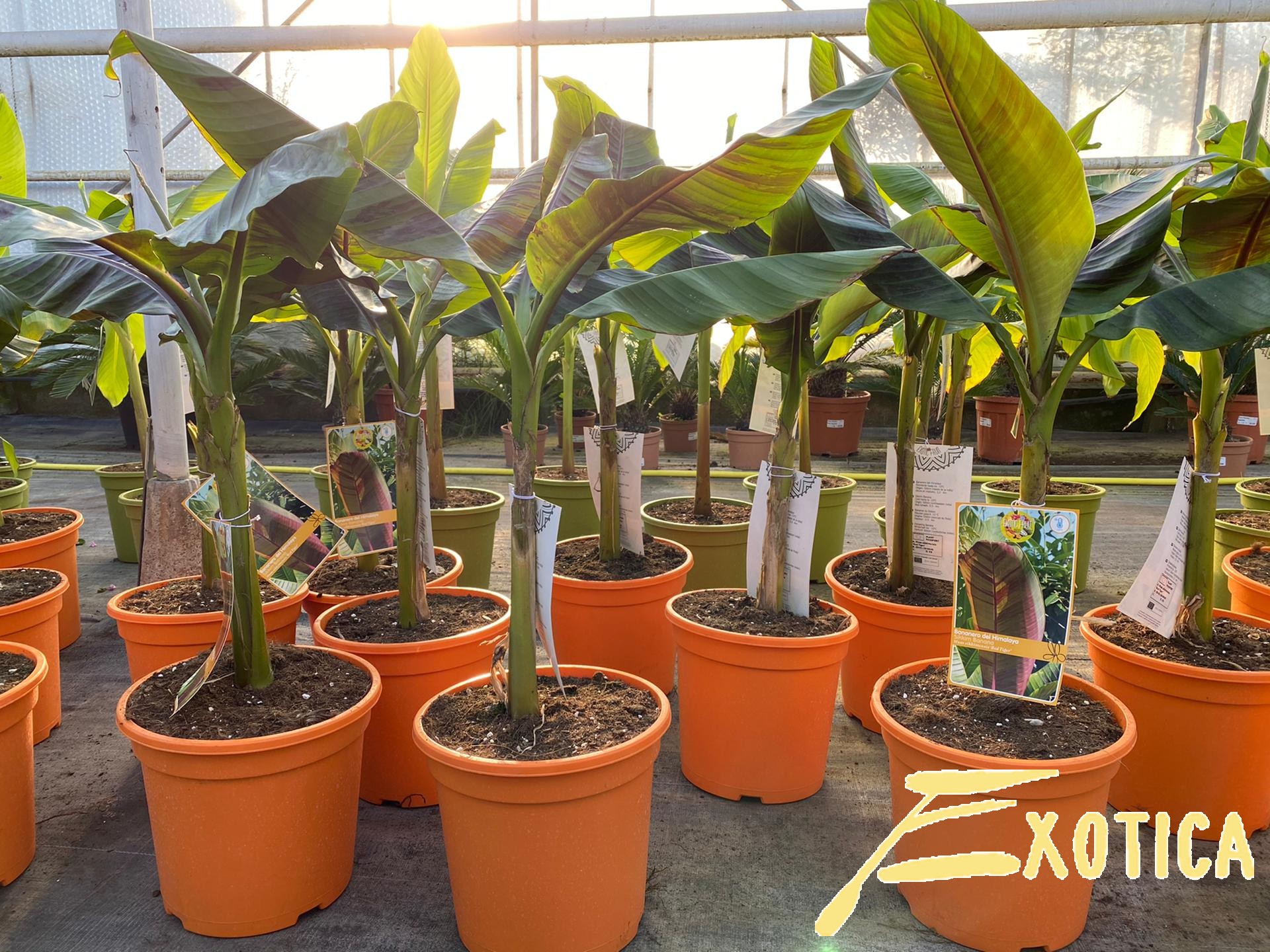
Musa sikkimensis ‘Red Tiger’, also known as Red Tiger banana, Darjeeling banana ‘Red Tiger’ or Bengal Tiger, is a graceful, hardy cultivar of the Darjeeling banana with striking red stripes and spots on the leaves.
Origin
- Derived from Musa sikkimensis, which occurs naturally in the eastern Himalayas.
- Grows in subtropical to temperate mountainous regions at about 1000–2000 meters altitude, with monsoon rains, mild winters, and sometimes snow.
- The cultivar ‘Red Tiger’ is a selected form with more intense red leaf markings; Relatively newly discovered and distributed by plant collectors for better color and ornamental value.
Care
- Grows as an upright, clod-forming plant to about 3–4 metres high and 2–3 metres wide; large, paddle-shaped leaves with dark green and purple-red stripes/spots.
- Prefers full sun to light partial shade; Sheltered location from strong winds (leaves tear easily).
- Plant in rich, moisture-retaining but well-drained soil (humus-rich, nutritious); add compost or old manure; pH neutral to slightly acidic.
- Watering: regular and abundant in growing season (spring/summer), keeping soil consistently moist; moderate in winter; drought-tolerant if established, but not allowed to dry out.
- Temperature/winter hardiness: very hardy for a banana; roots down to -14/-16 °C (sometimes lower with mulch); Above ground dies in frost, but often recovers from the rhizome; In colder areas (up to zone 7–8), protect with a thick layer of mulch (straw, leaves, fleece), cut off the pseudo-stem and cover.
- Fertilization: a lot of food in the growing season (high potassium fertilizer for bananas/tropical plants); organic manure (horse manure, cow manure pellets) in spring; Do not over-fertilize.
Usage
- Mainly ornamental plant (ornamental): grown for exotic appearance, large leaves with dramatic red stripes/spots; Ideal as an accent in tropical borders, exotic gardens, patios or pots.
- Attracts attention in jungle- or tropical-themed gardens; Beautiful in combination with other hardy exotics.
- Fruits: sometimes produces small, seed-rich bananas (not tasty, inedible due to hard seeds).
Related products
-
Musa Balbisiana ‘Thai Black’
€14.95