Banksia Baueri
April 7, 2026
Bixa Orellana – Lipstick Tree
April 7, 2026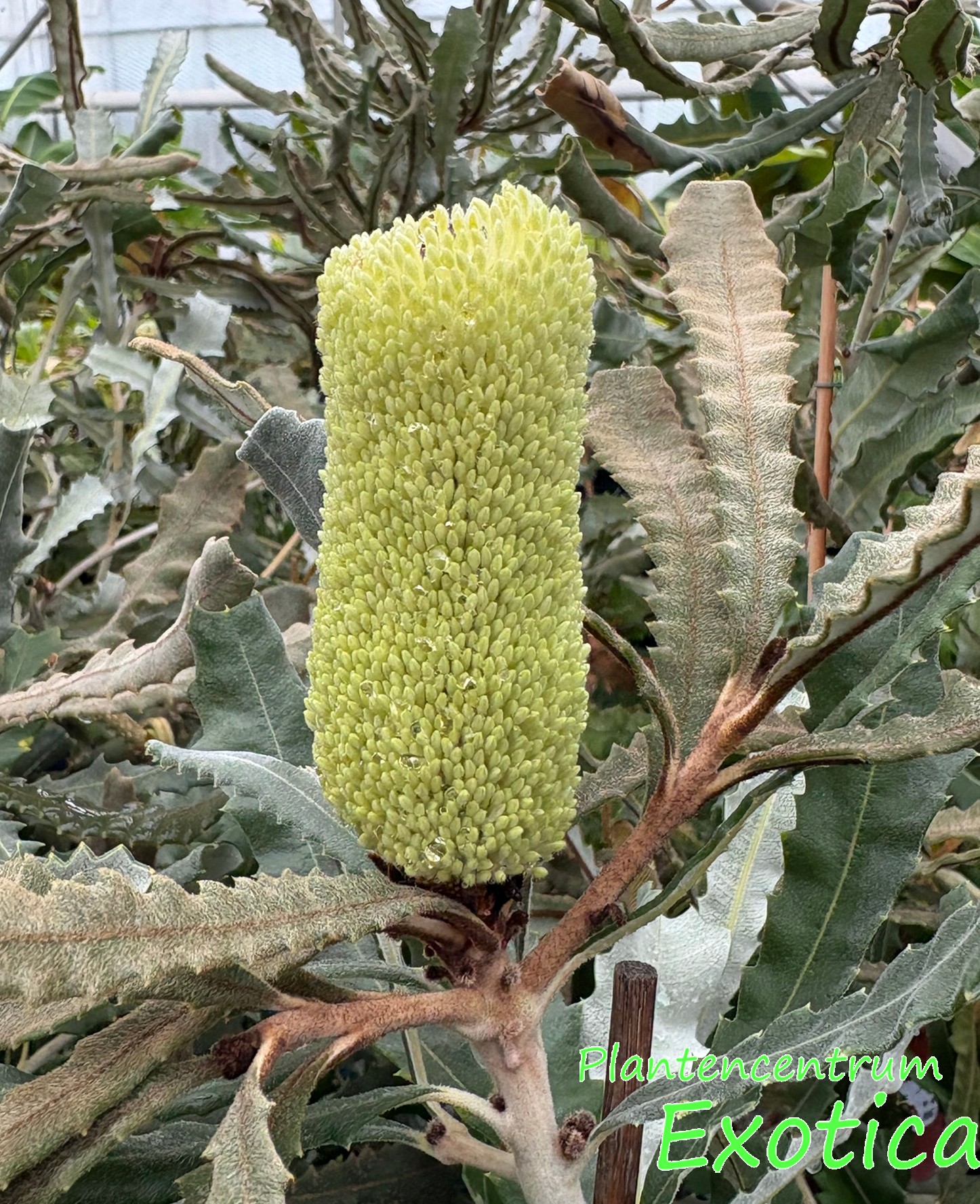

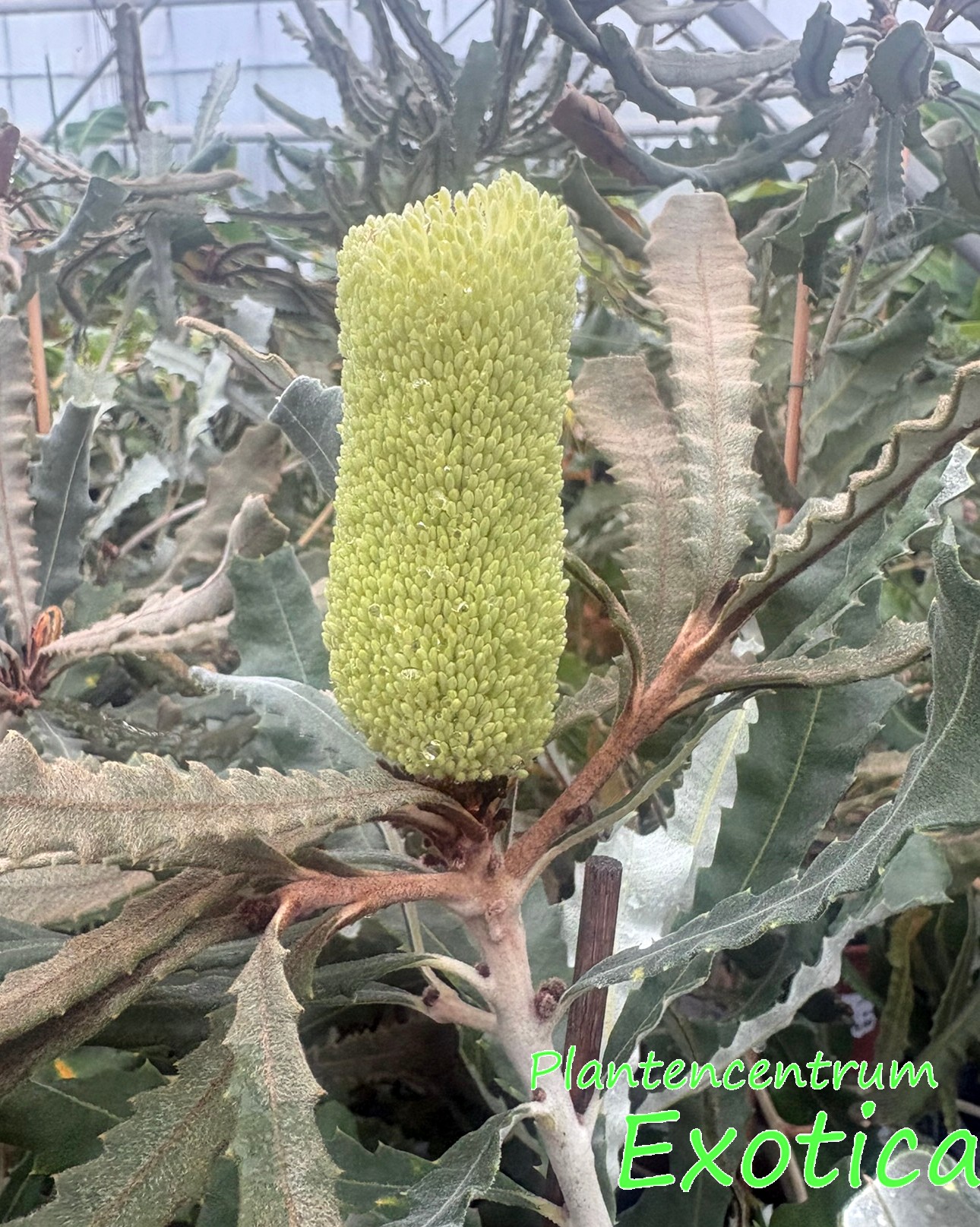

Banksia Pilostylis
| Min Temp : | -5°C |
| Position: | Sunny |
| Water requirements : | Average |
| Flowering period: | 9-4 |
| Scented : | No |
| Edible: | No |
| Use: | Tub / Terrace / Houseplant |
| Evergreen: | Yes |
| Height: | up to 1m |
€19.95
Banksia pilostylis:
Origin
- Endemic to Western Australia, primarily in the southwestern part (around Albany, Denmark, and the Stirling Range).
- Grows naturally in sandy, well-drained soils in open woodlands, heathlands, and low scrub.
- Adapted to a Mediterranean climate with wet winters and dry summers.
- Belongs to the Proteaceae family.
Care
- Grows as a compact, rounded shrub 1 to 2.5 m high and wide.
- Needs full sun for good flowering.
- Plant in very well-drained, acidic to slightly acidic sandy soil (pH 5.5–6.5). Avoid heavy clay and rich soils.
- Highly drought-tolerant once established; only water during prolonged dry spells.
- Hardiness: moderate. Tolerates short periods of light frost down to about -5°C. In the UK and Northern Europe, it is best grown as a container plant and overwintered frost-free (5–10°C, bright spot).
- Fertilisation: use only low-phosphorus fertiliser (specifically for Proteaceae or Australian plants). Too much phosphorus will kill the plant.
- Pruning: prune lightly after flowering to keep the shrub compact and bushy.
- Extra tip: ensure good air circulation to prevent fungal issues.
Usage
- Mainly used as an ornamental plant for its large, striking, cylindrical flower heads that are cream-white to pale yellow and often have a pink glow.
- Attracts honeyeaters, bees, and butterflies.
- Perfect for xeriscape gardens, rock gardens, and large pots on a sunny patio.
- The flowers make excellent cut flowers and stay beautiful in a vase for a long time.
| Weight | N/A |
|---|
Related products
-
Alstroemeria Briançon 70/80
€11.27 -
Alstroemeria William 50/60
€11.27