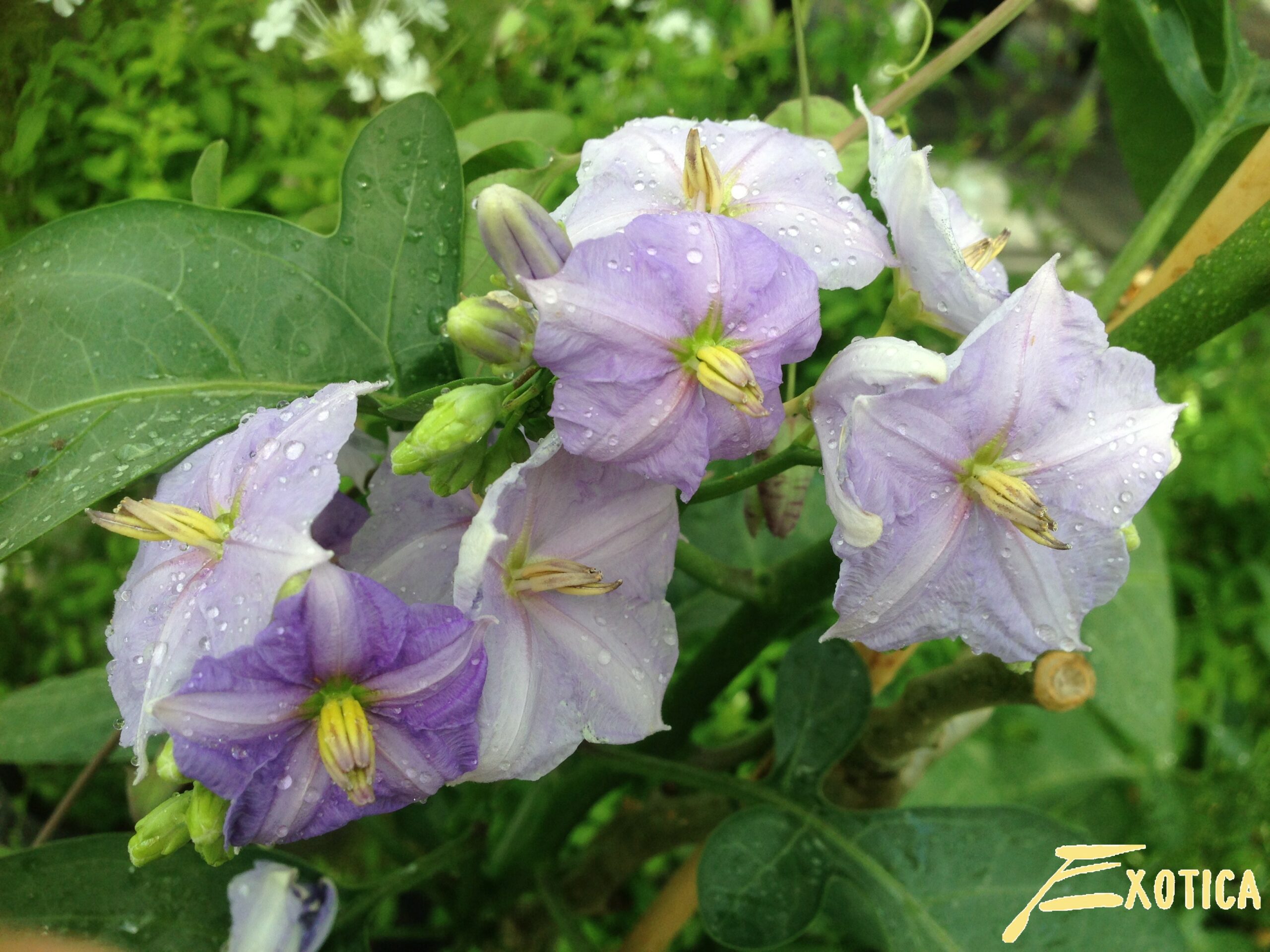
Solanum Wendlandii -Costa Rican nightshade
July 7, 2015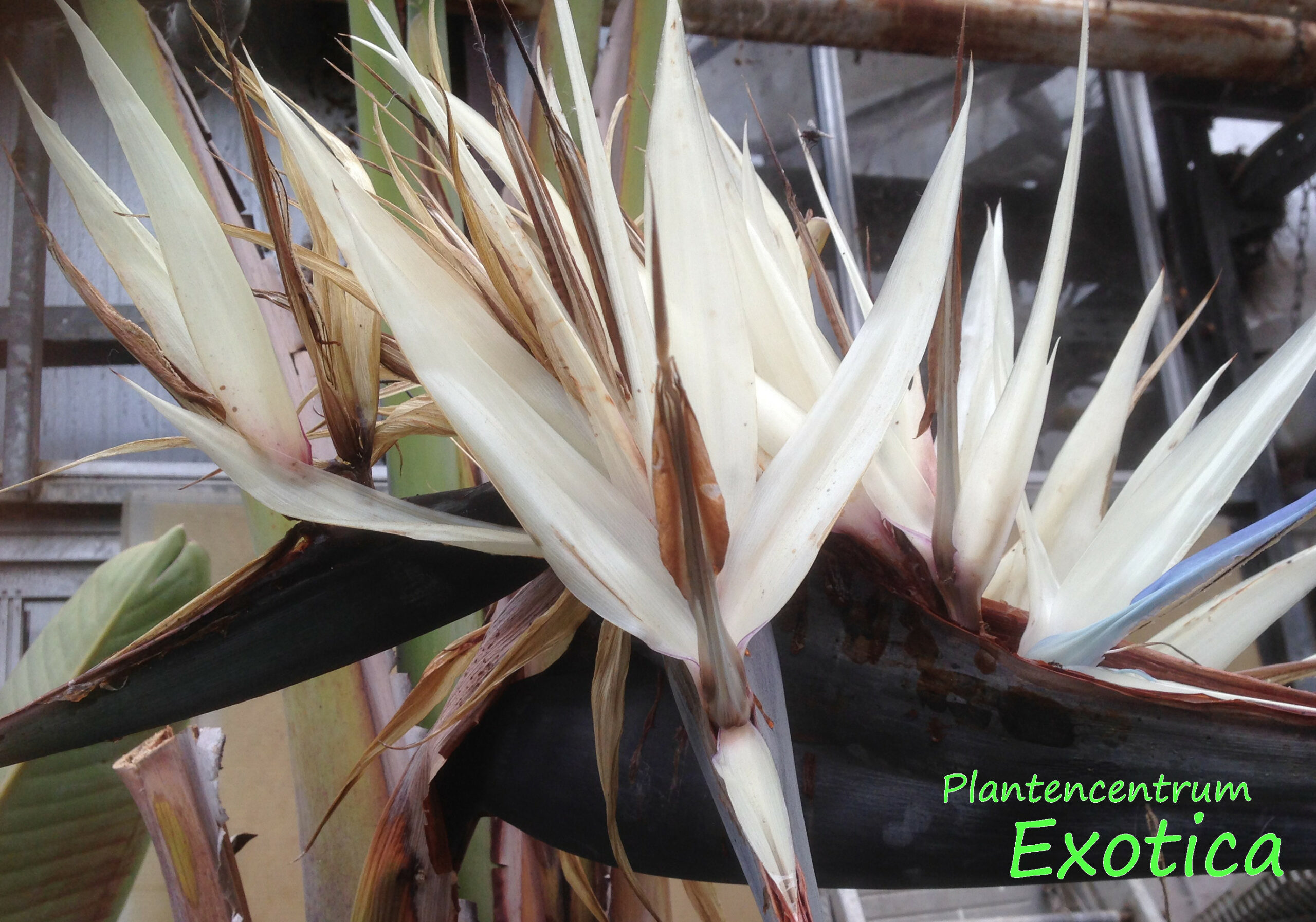
Strelitzia Augusta/Nicolai
July 7, 2015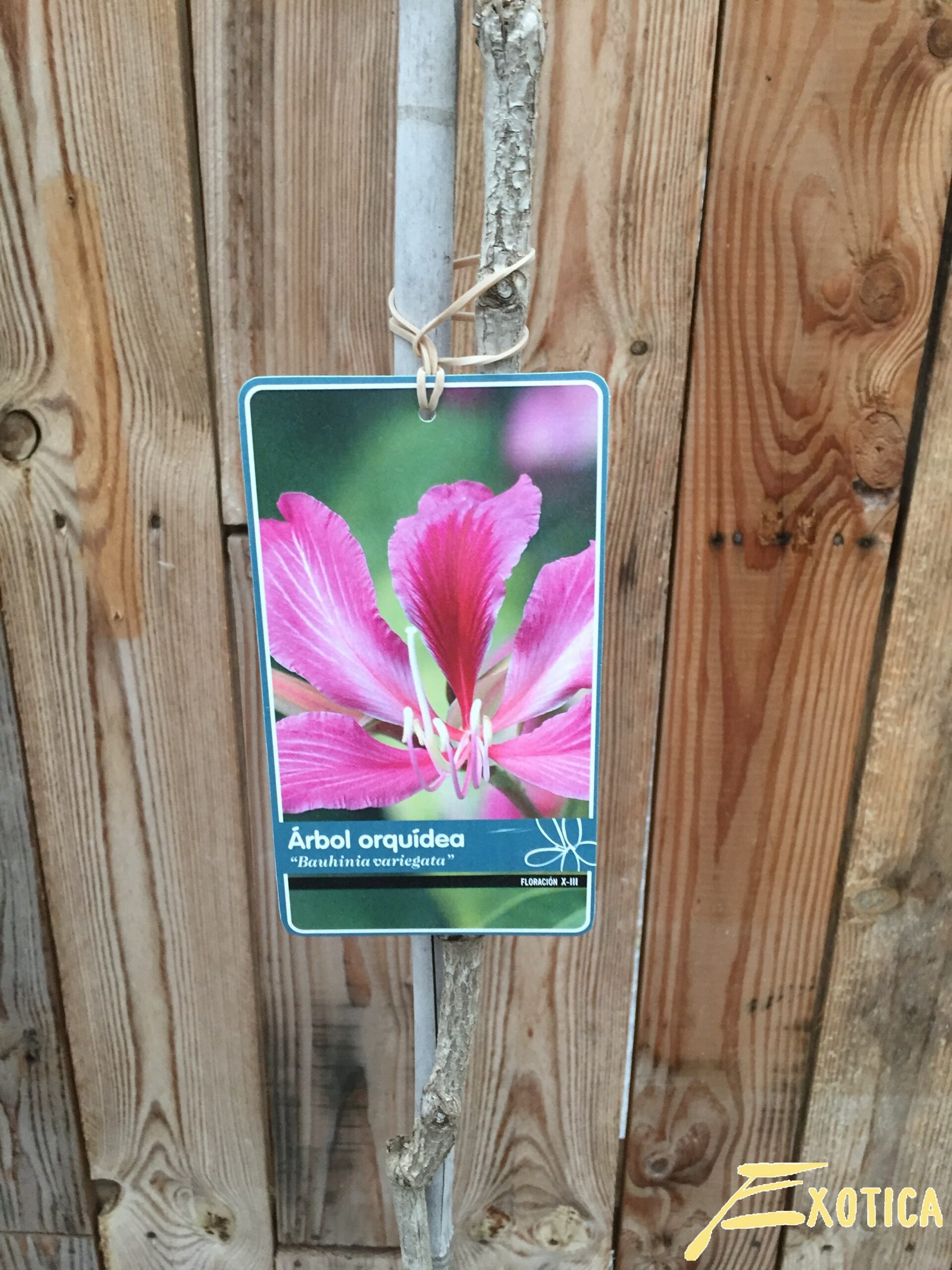
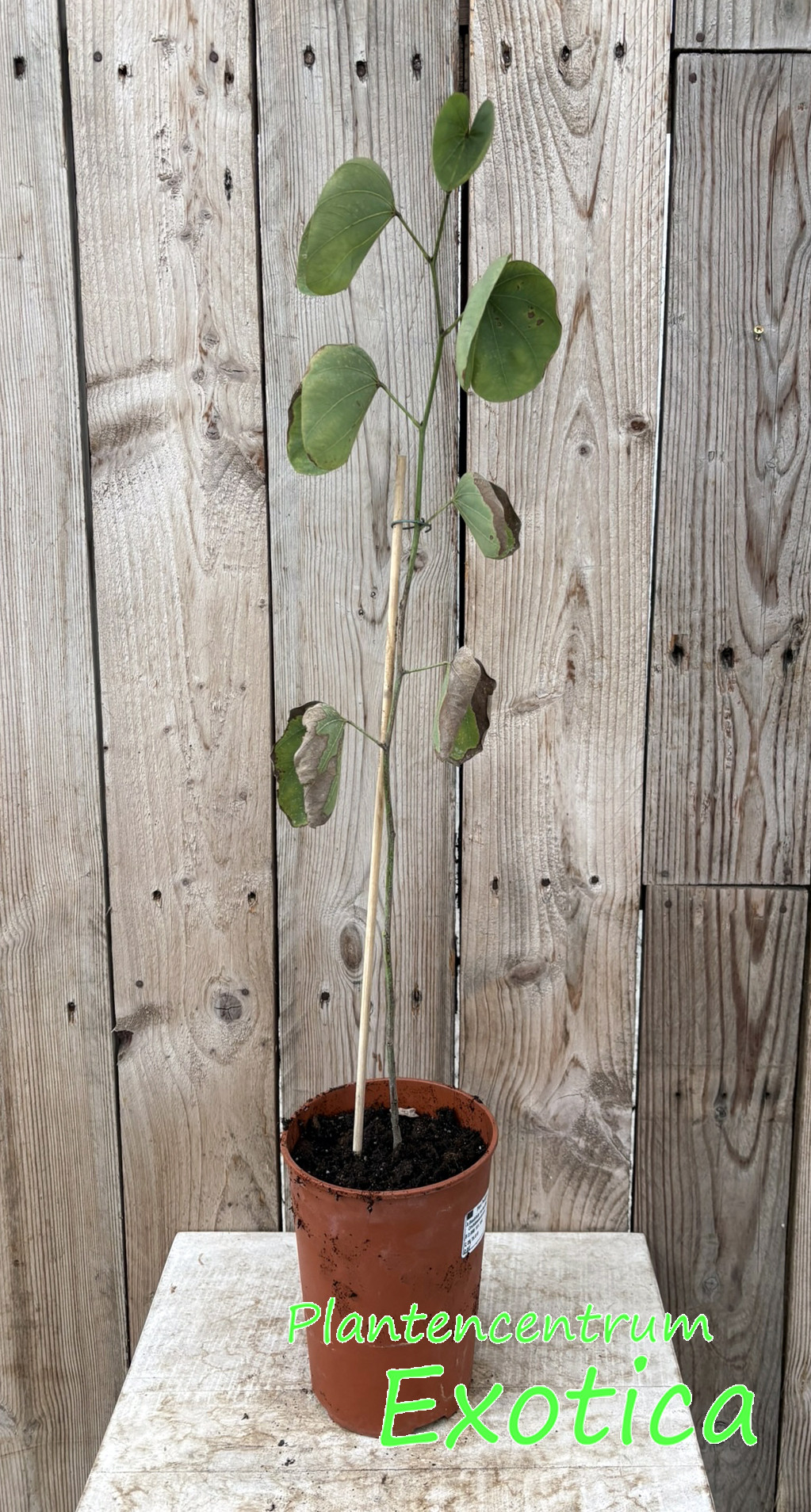
Bauhinia Variegata – Orchid tree
(Slight leaf damage just after winter)
| Min Temp : | -1°C |
| Pitch: | Sunny / Partial shade |
| Water requirements : | Medium to high |
| Flowering period : | Summer |
| Scented : | No |
| Edible: | No |
| Use: | Container / Patio plant |
| Evergreen : | Yes, semi evergreen |
| Height: | Up to 2m and more |
€19.95
Bauhinia variegata, also known as orchid tree, mountain ivory, is a beautiful, tropical tree from the legume family with orchid-like flowers and unique, butterfly-shaped leaves.
Origin
- Native to tropical and subtropical Asia, especially India (including Himalayan region), China (southern provinces), Sri Lanka, Nepal, Bhutan, Myanmar, Thailand , and other parts of Southeast Asia.
- Grows naturally in moist valleys, open forests, mountainous areas, along rivers and in tropical lowlands on well-drained soils.
- Endemic to South and Southeast Asia; imported worldwide and grown in warm climates (such as Florida, Australia, South Africa, Mediterranean region).
- Adapted to hot, humid climates with drier periods; belongs to ancient tropical flora.
Care
- Grows as a small to medium-sized, semi-evergreen or deciduous tree up to 6 meters high and wide, with a broad, fanning crown and double-lobed leaves (cow’s hoof- or butterfly-shaped).
- Prefers full sun for the best flowering; Light partial shade is possible, but full sun gives more intense flower colour.
- Plant in well-drained, fertile soil (sandy-loamy, slightly acidic to neutral, pH 6.0–7.5); Add organic matter, but avoid heavy clay or wet feet (root rot risk).
- Watering: regularly during establishment and growing season (spring/summer); moderate thereafter (drought-tolerant if established); keep the soil slightly moist, but not soaked; less water in autumn/winter to encourage leaf drop and flowering.
- Winter hardiness: limited (USDA zones 9b–11); tolerates light frost down to about -5°C for a short time; in colder climates (such as the Netherlands) grow as a container plant and overwinter frost-free (min. 5–10 °C, light spot indoors).
- Fertilization: Balanced fertilizer every 4–6 weeks during the growing season; potassium-rich during flowering; not too much nitrogen (promotes leaves at the expense of flowers).
- Pruning: light after flowering or in spring to retain shape; young trees lead for a single trunk; heavy pruning possible.
Usage
- Mainly ornamental plant grown for the spectacular pink, purple or white orchid-like flowers in spring/winter; ideal as an avenue tree, solitary in gardens, parks or streets; offers shade and tropical atmosphere.
- Edible: young flower buds as a vegetable (in curries, steamed or baked); flowers in salads or tea.
Related products
-
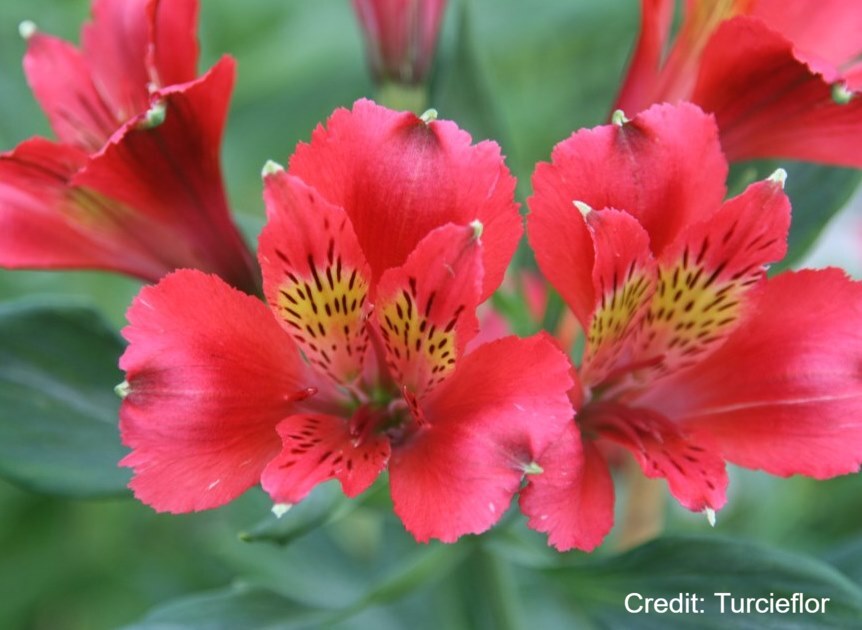
Alstroemeria Diane 30/40
€11.95 -
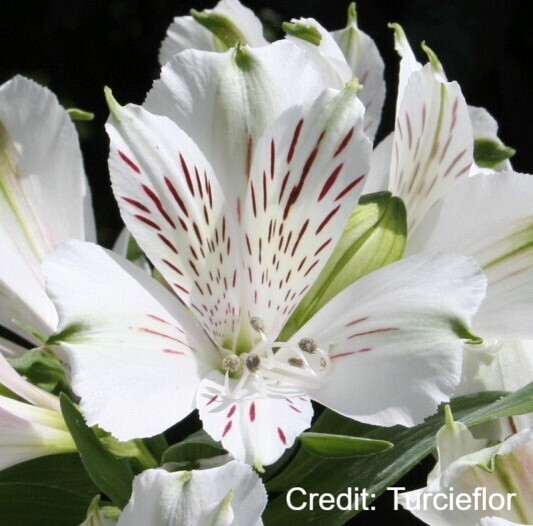
Alstroemeria Nicolas 50/60
€11.95