Gunnera species
September 1, 2026
Costus pictus – insulin plant
September 17, 2026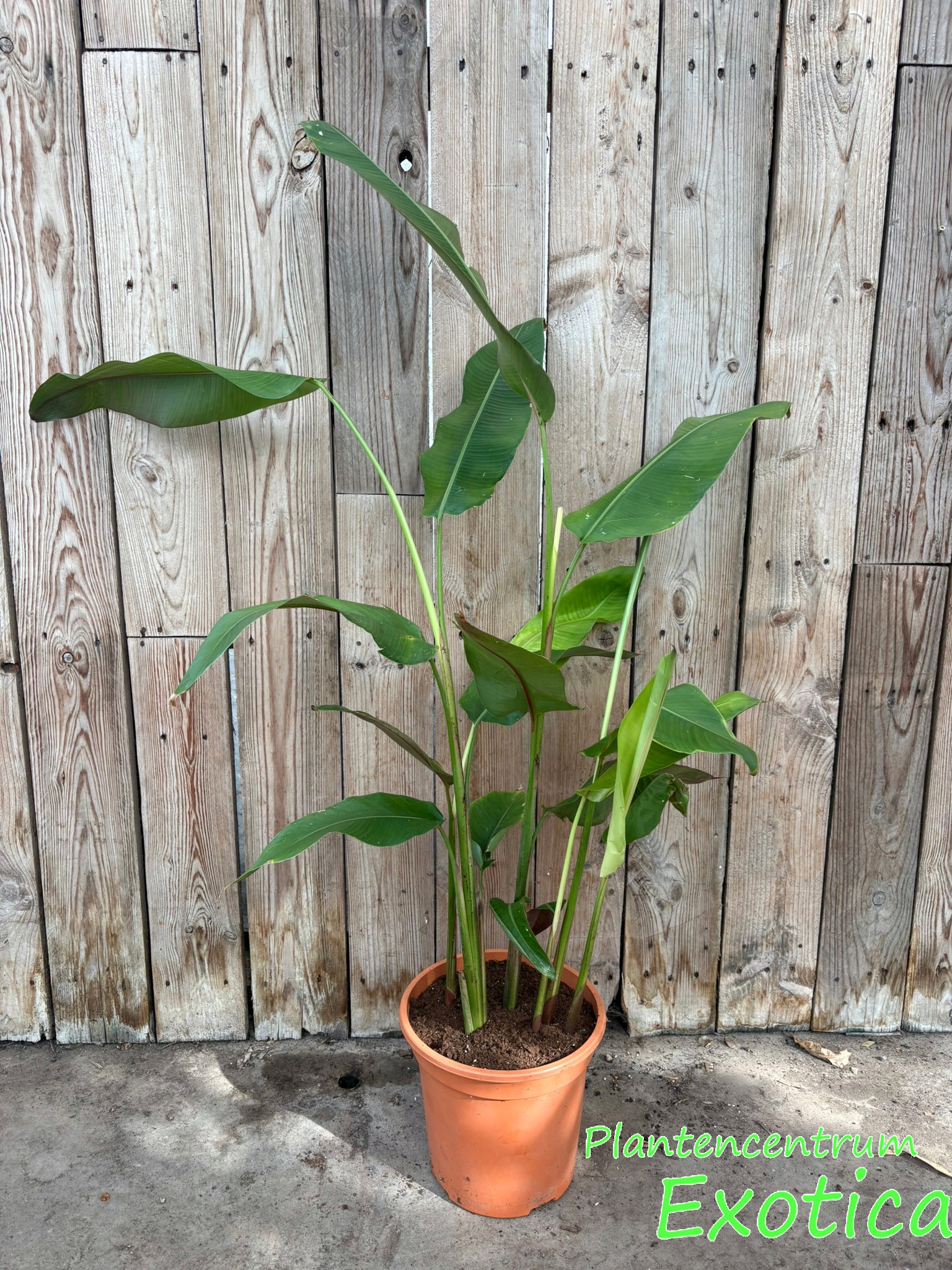
Heliconia Rostrata
| Min Temp : | +15° |
| Position: | Sunny / Partial shade |
| Water requirements : | High in summer, moderate in winter |
| Flowering period: | Summer / Autumn |
| Scented: | No |
| Edible: | No |
| Use: | Tub / houseplant |
| Evergreen: | Yes |
| Height: | 150 cm and more |
€49.95
Origin
- Heliconia rostrata belongs to the Heliconiaceae family.
- Originally from the tropical regions of Central and South America, particularly northwestern South America.
- Grows naturally in warm, humid tropical forests.
- The plant grows from underground rhizomes and forms clusters of sturdy, upright shoots.
- The striking, pendulous inflorescence consists of red bracts with yellow and green edges.
- The flowers produce nectar and are primarily pollinated by hummingbirds in their natural habitat.
- Heliconia rostrata is the national flower of Bolivia, where it is known as patujú.
Care
- Light: plenty of bright light and possibly a few hours of direct sun. Sufficient light is important for flowering.
- Temperature: loves warmth; around 20–30 °C is ideal during growth.
- Water: keep the soil evenly moist, but provide good drainage so the rhizomes don’t sit in wet soil for long periods.
- Humidity: high humidity promotes healthy growth.
- Soil: rich, airy, and well-drained soil with plenty of organic matter.
- Fertilization: apply a complete fertilizer regularly during active growth. Excessive nitrogen can cause heavy leaf growth at the expense of flowers.
- Pruning: do not cut back healthy shoots prematurely. Only remove old shoots after they have flowered and begun to die back.
- Overwintering: Heliconia rostrata is not hardy. In temperate climates, it must overwinter frost-free, preferably in a warm and bright spot.
Usage
- Widely used as an ornamental plant in tropical and subtropical gardens.
- Its large leaves and height make it suitable for tropical garden planting or as a striking specimen plant.
- In colder climates, it is mainly kept in a heated conservatory, greenhouse, or large planter.
- The spectacular inflorescences are widely used as cut flowers in tropical floral arrangements.
- The flowers are prized for their long vase life and striking shape.
- In tropical gardens, the plant is also attractive to local fauna, especially nectar-seeking birds like hummingbirds.
Related products
-
Raphionacme Burkei
€59.95 -
Euphorbia Trichadenia
€49.95