Xanthosoma Sagittifolium – Chewer
May 15, 2023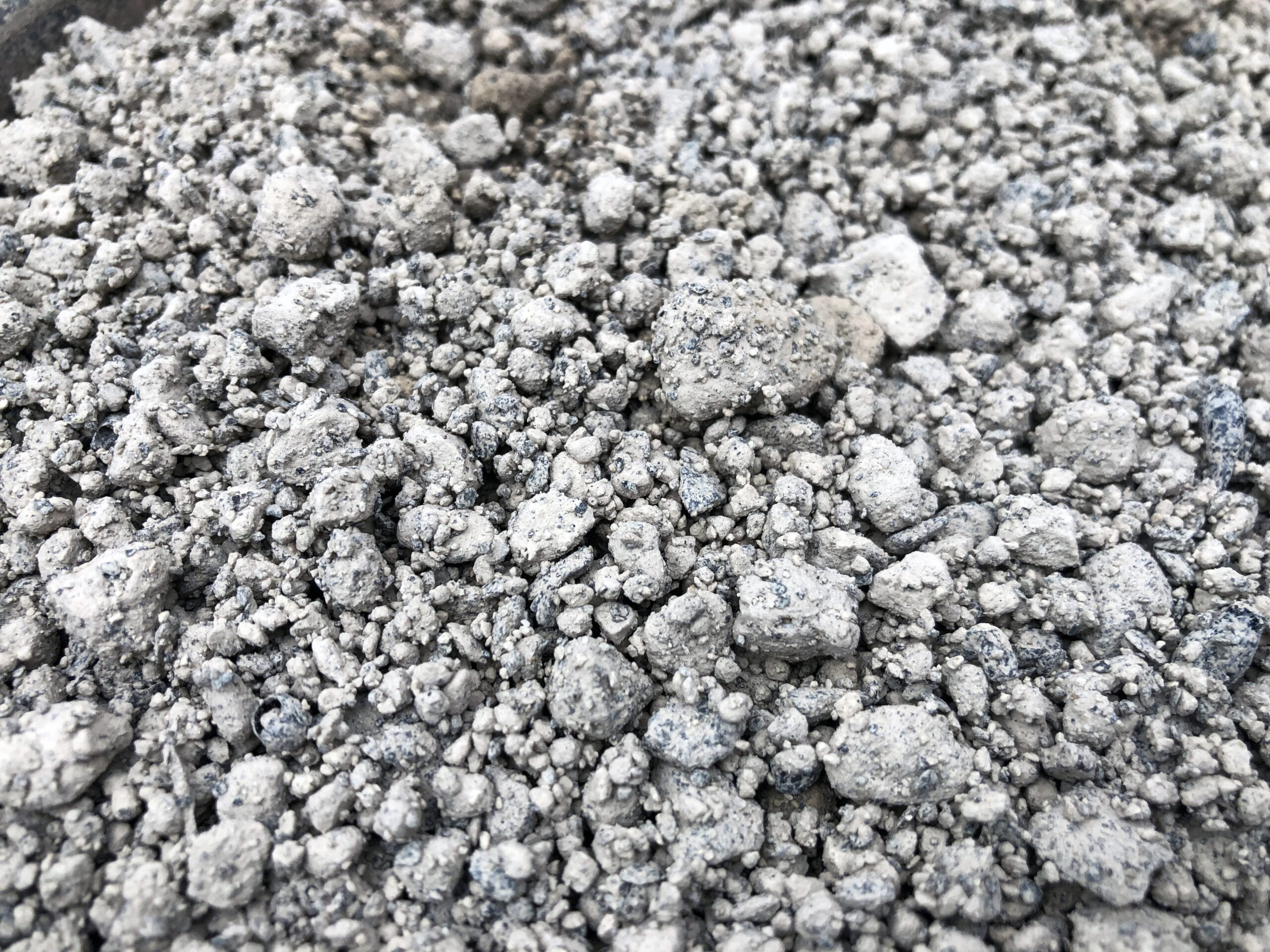
Bims / Pumice 2/12mm washed 25l
May 20, 2023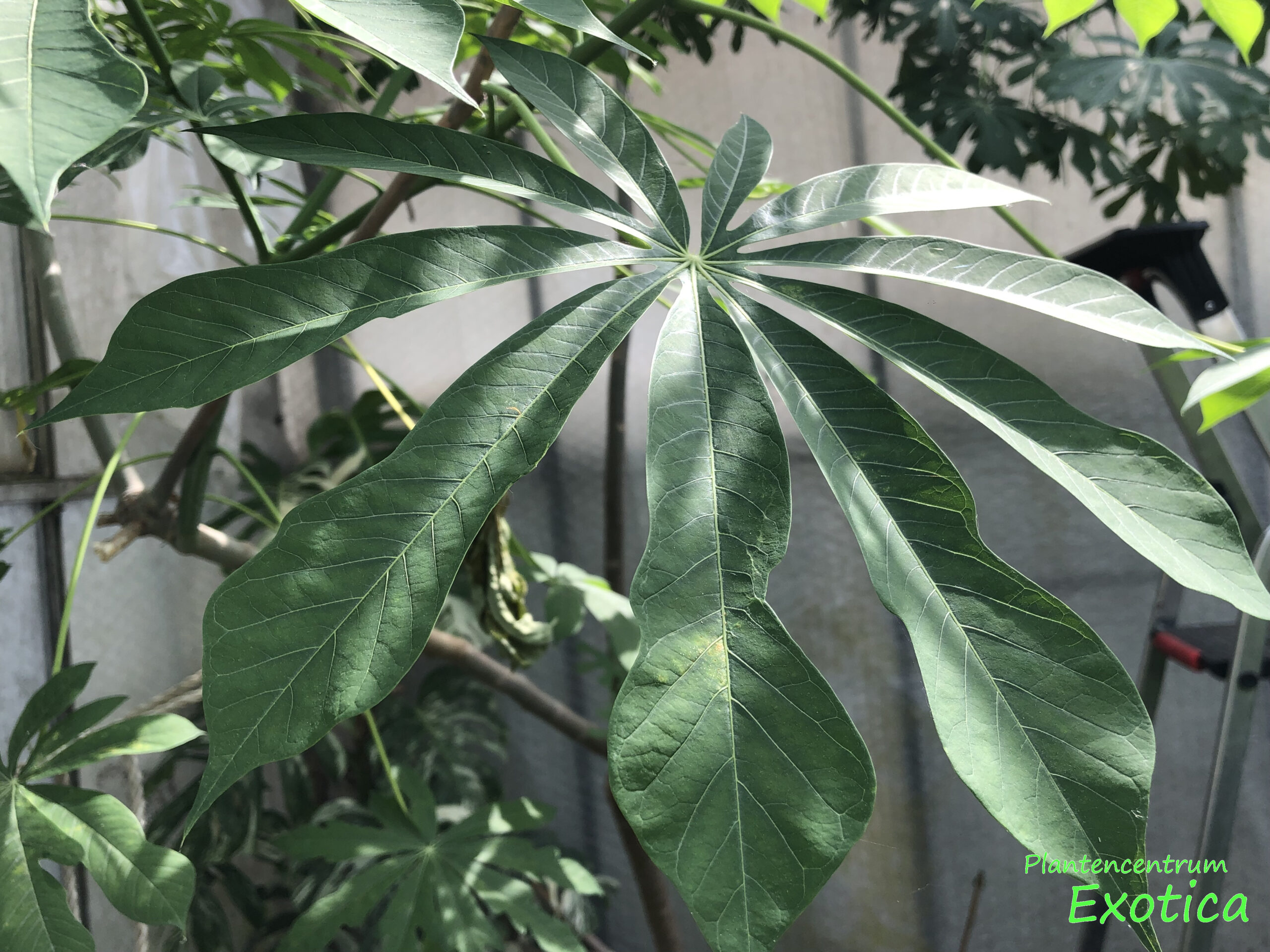
Manihot grahamii – Hardy Cassava
| Min Temp: | -10°C |
| Position: | Sunny / Partial shade |
| Water requirements: | High in summer, moderate in winter (dormancy period) |
| Flowering period : | summer/autumn |
| Scented: | No |
| Edible: | No |
| Use: | Tub / patio plant |
| Evergreen: | No |
| Height: | 150 cm and more |
€19.95
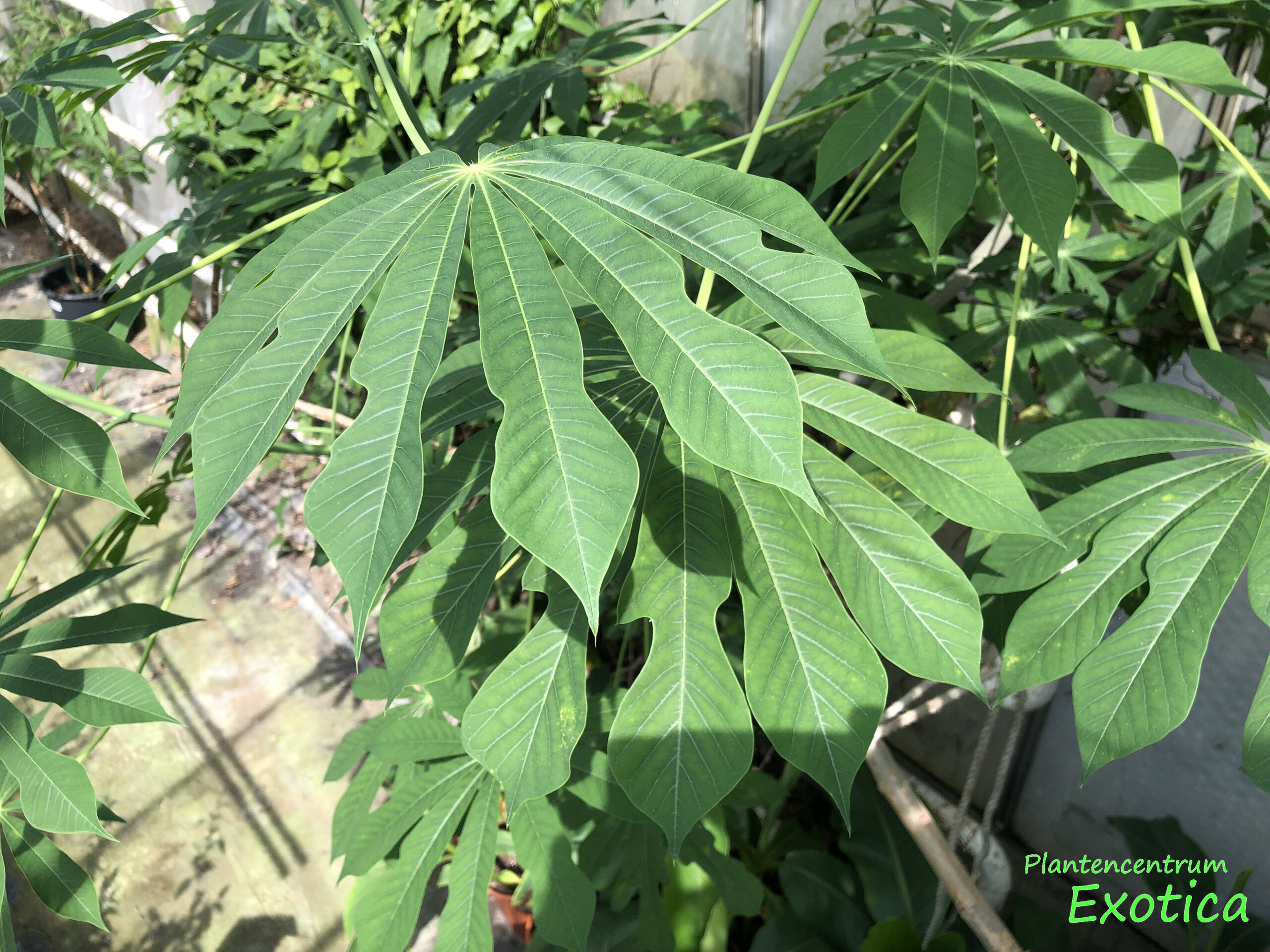
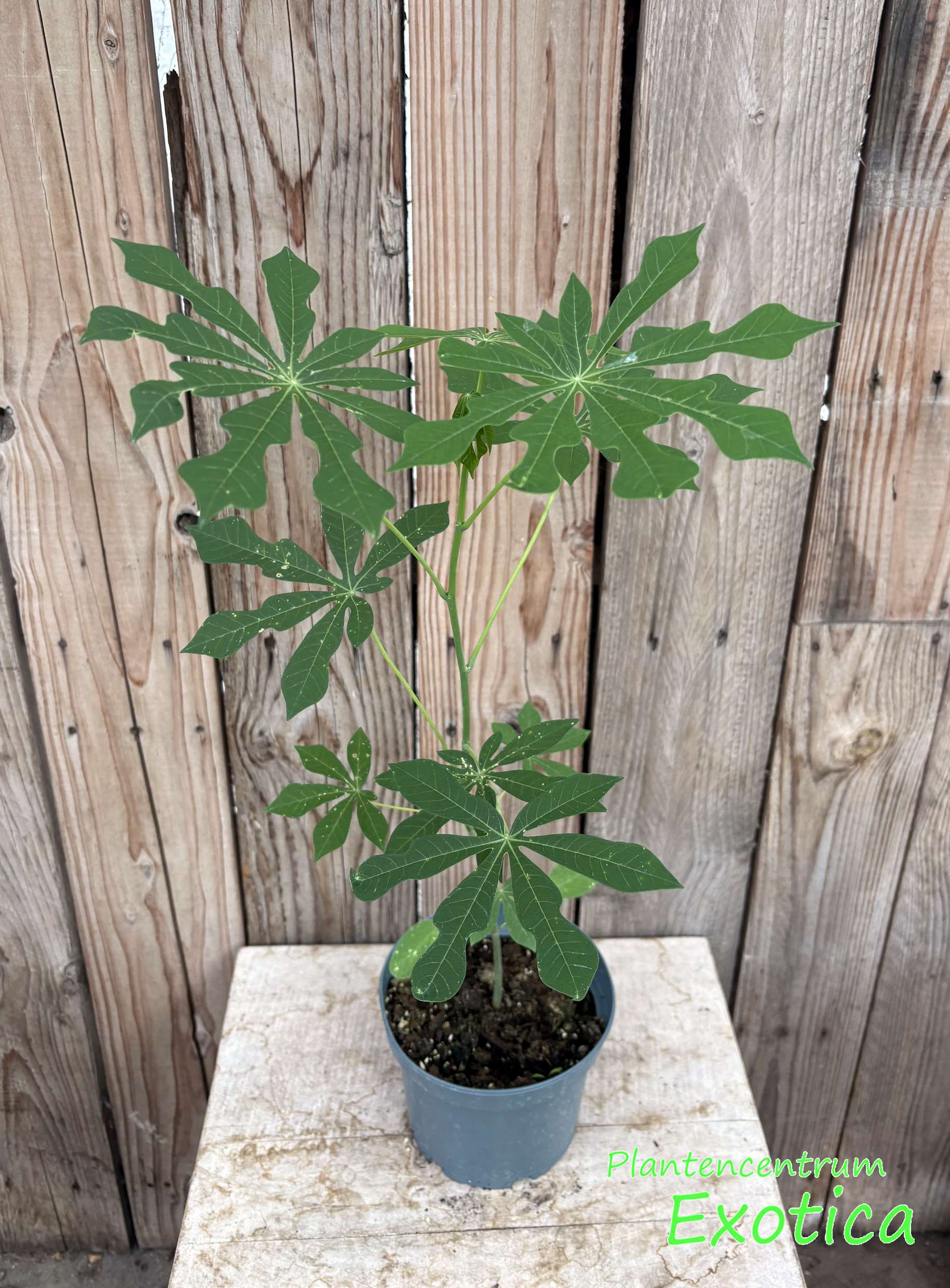
The Manihot grahamii, also known as Graham’s cassava or hardy cassava, is a fascinating botanical specimen belonging to the Euphorbiaceae family; while closely related to the edible cassava (Manihot esculenta), it is primarily prized for its exceptional ornamental value and significant ecological role.
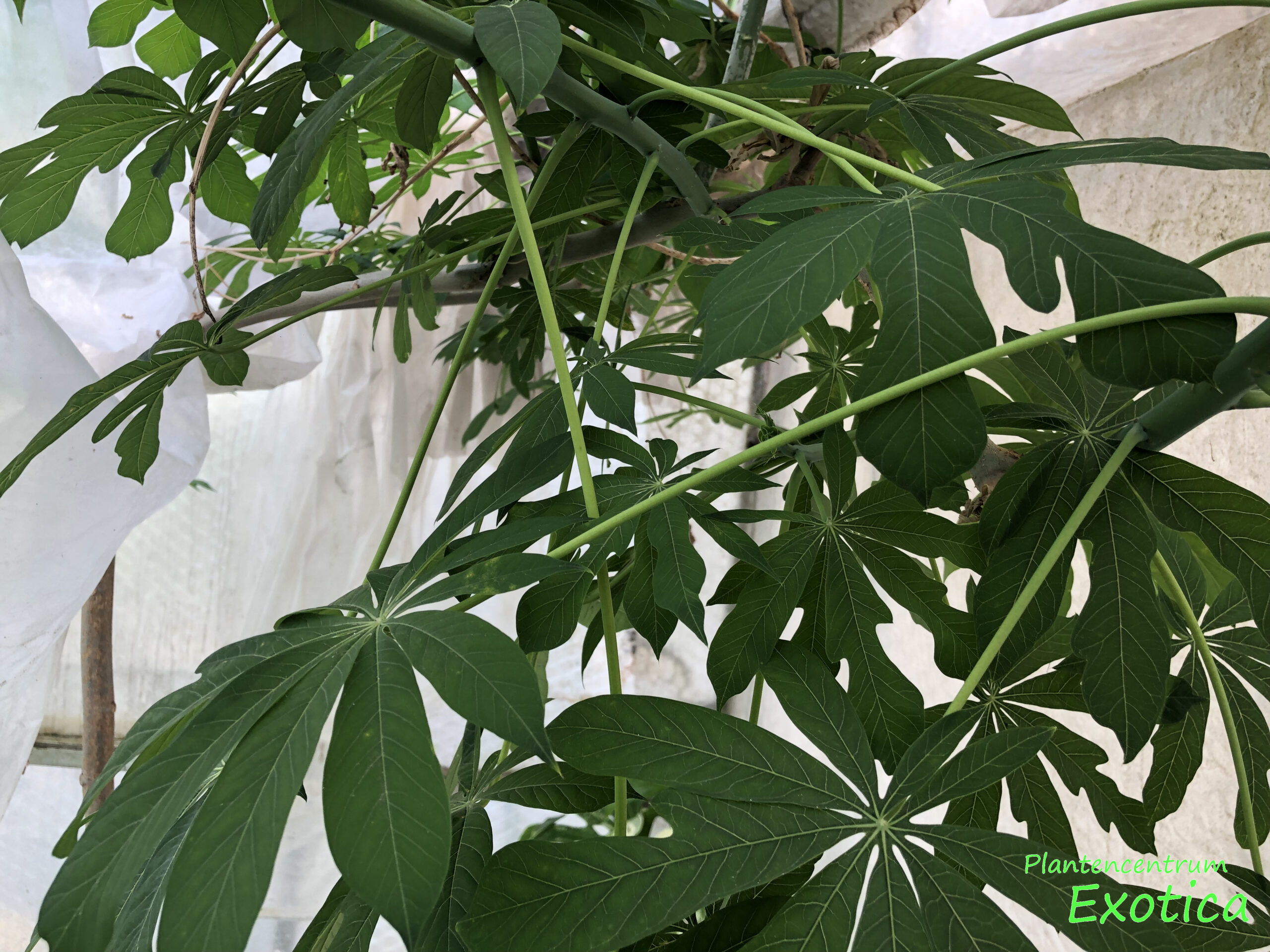
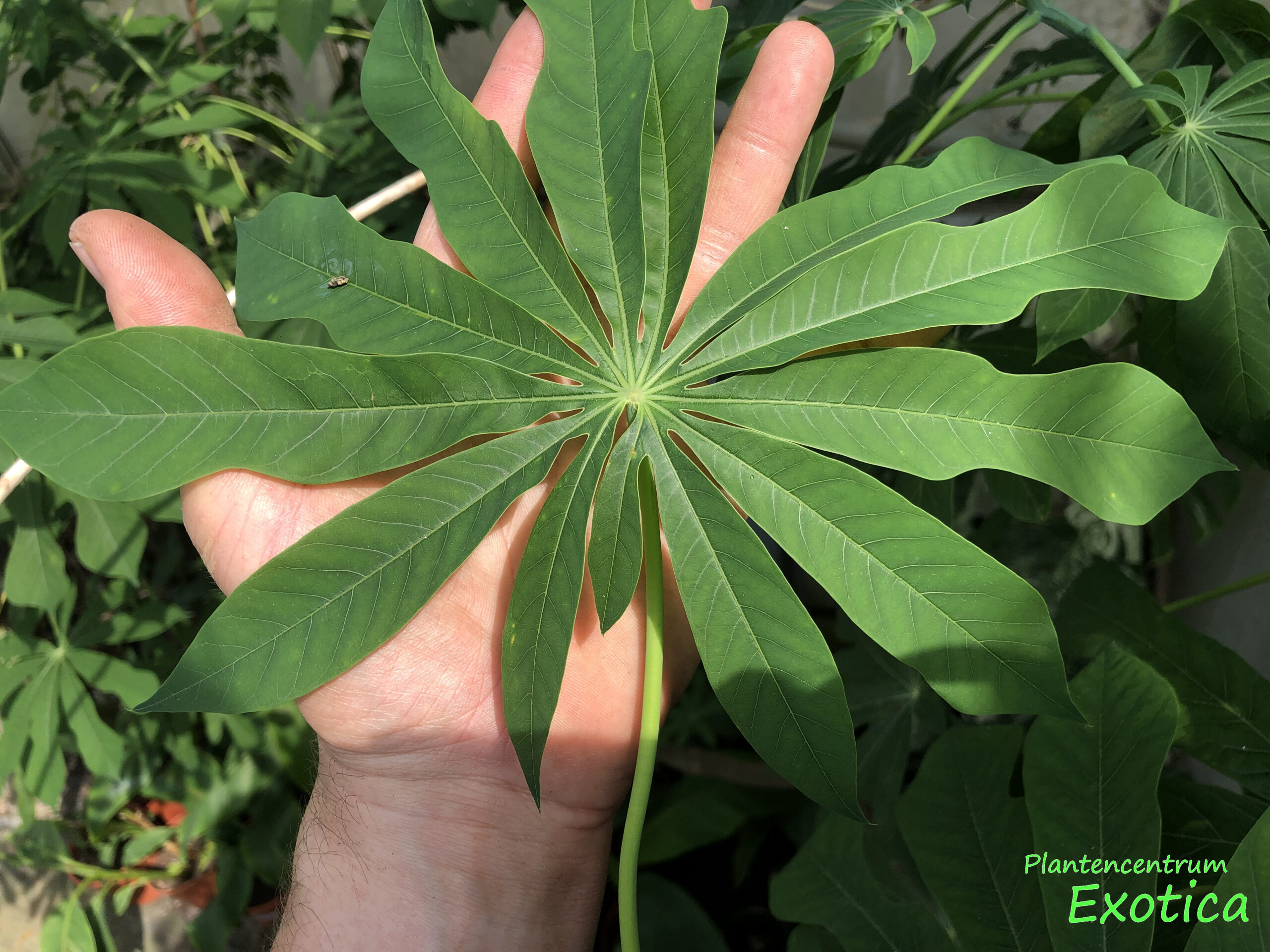
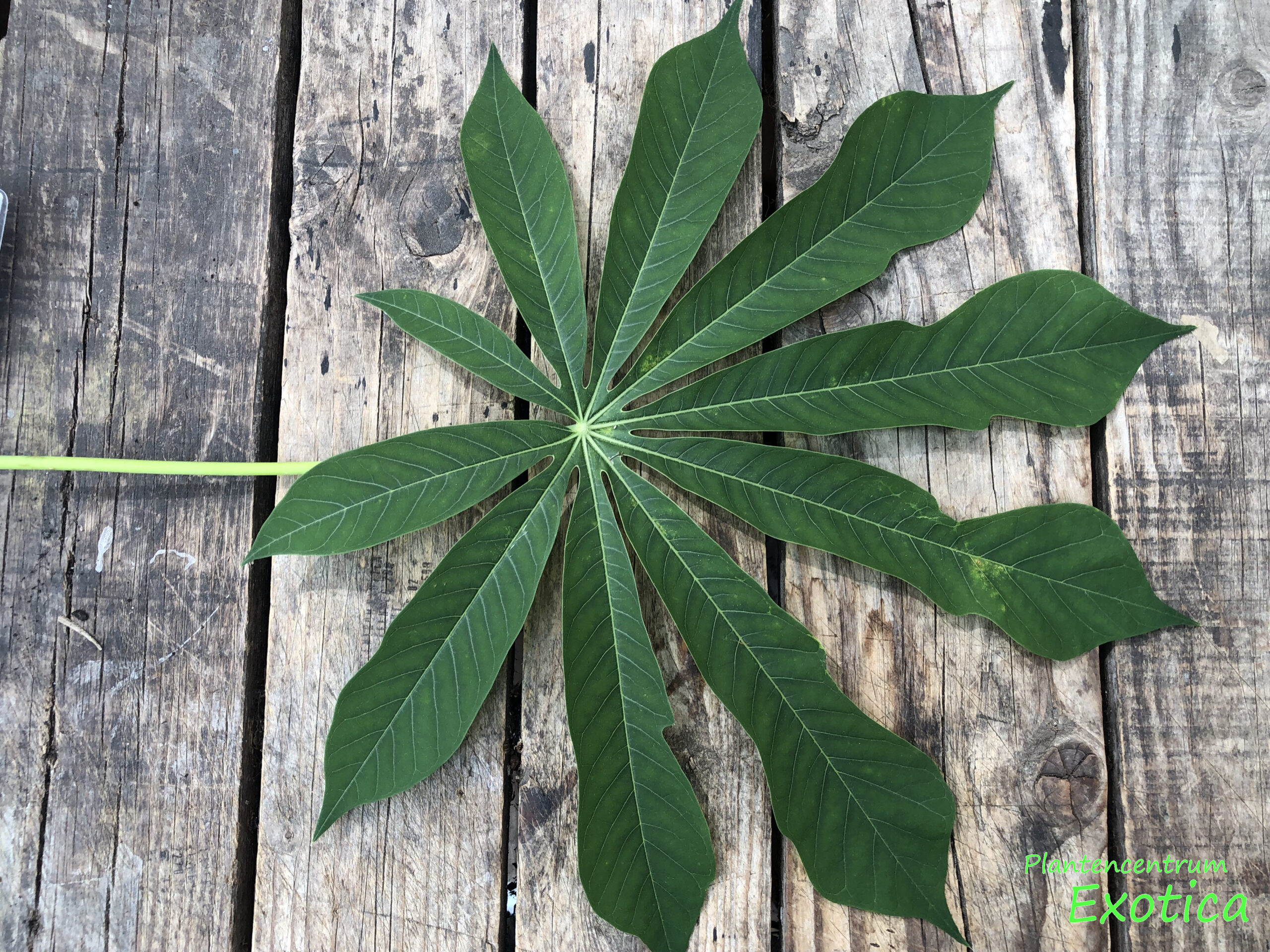
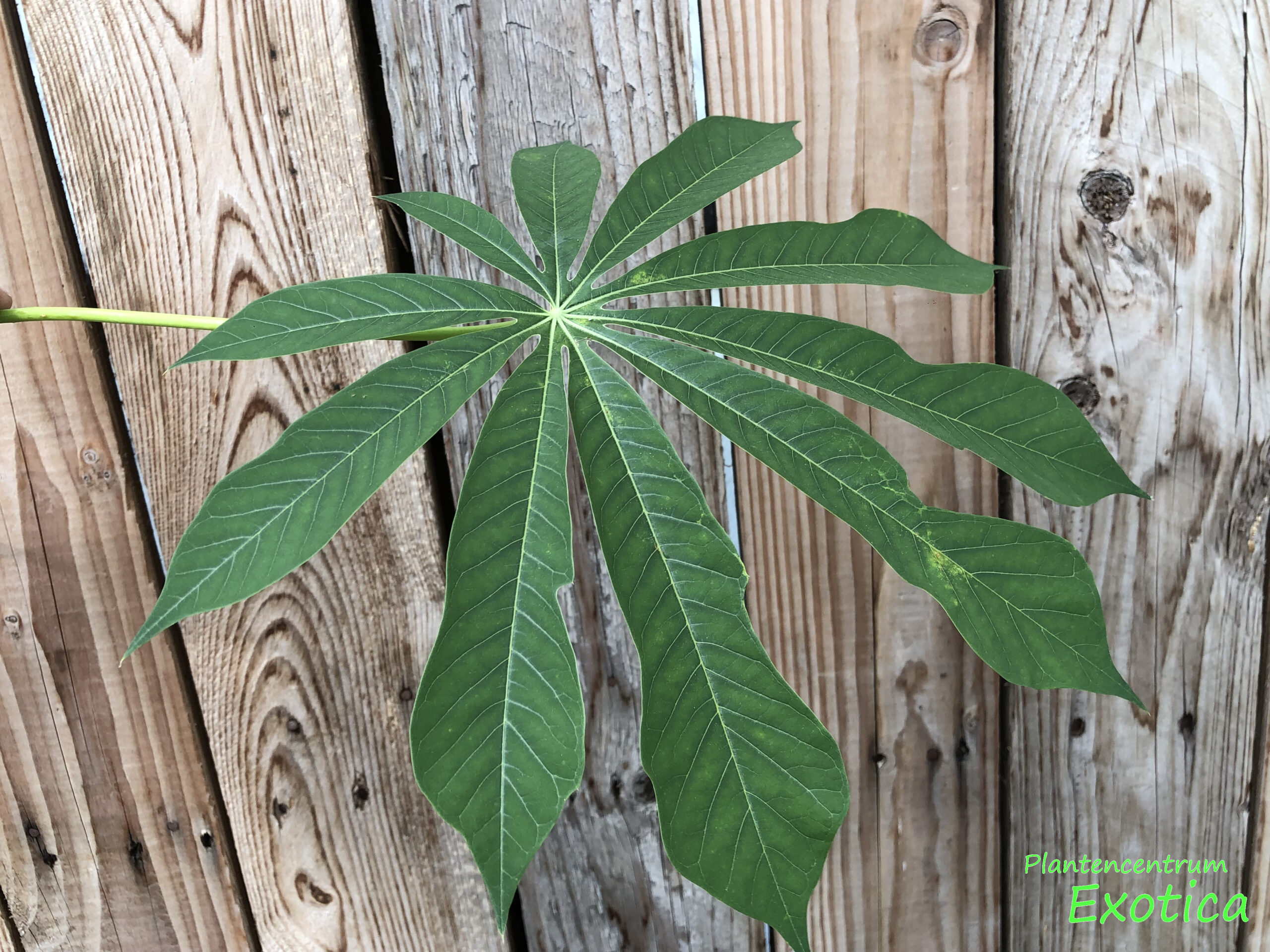
The foliage of Manihot grahamii is deeply incised and palmate, typically featuring 5-7 lobes in a striking, bright green hue that can reach widths of up to 15 cm;
the plant produces small, inconspicuous greenish-yellow flowers arranged in clusters, which are generally dioecious, meaning male and female blooms occur on separate specimens;
depending on environmental conditions, this species can achieve a height of 2-4 meters, exhibiting a robust, multi-stemmed bushy growth habit.
Manihot grahamii is indigenous to South America, specifically across regions of Argentina, Brazil, Paraguay, and Uruguay;
owing to its ornamental appeal and ecological contributions, it is now cultivated globally, including throughout North America and Europe.
This species is highly regarded as an ornamental plant due to its dramatic foliage and exotic architectural presence, making it a popular choice for tropical and subtropical garden designs, whether utilized as a hedge or a focal accent plant;
within its natural habitat, Manihot grahamii performs a vital ecological function by providing essential sustenance and shelter for various fauna, including insects and birds;
furthermore, the plant is occasionally utilized in scientific research because its close relationship to the edible cassava (Manihot esculenta) offers valuable insights into the genetics and physiological traits of the staple crop.
Thriving best in warm, subtropical to tropical climates, this plant is moderately hardy and capable of tolerating light frosts;
while Manihot grahamii prefers fertile, well-drained soils, it demonstrates adaptability to poorer soil types;
optimal development is achieved in full sun to partial shade, though in exceptionally hot climates, some afternoon shade may prove beneficial.
Juvenile specimens require regular irrigation, yet once established, they exhibit notable drought tolerance, provided the soil remains moist but never waterlogged;
during the active growing season, the application of a balanced fertilizer can further stimulate vigorous health;
pruning is generally unnecessary, except for the removal of dead or damaged wood to maintain the plant’s structural integrity.
Although Manihot grahamii is non-edible, its close taxonomic link to the edible cassava (Manihot esculenta)—a primary crop in many tropical nations—remains significant;
the plant’s rapid growth rate allows it to reach substantial heights quickly, rendering it an effective choice for use as a screen or windbreak.
| Weight | N/A |
|---|
Related products
-
Urginea Epigea
€42.50 -
Euphorbia abdelkuri
Price range: €75.00 through €105.00