Prunus persica nucipersica – Nectarine
April 18, 2024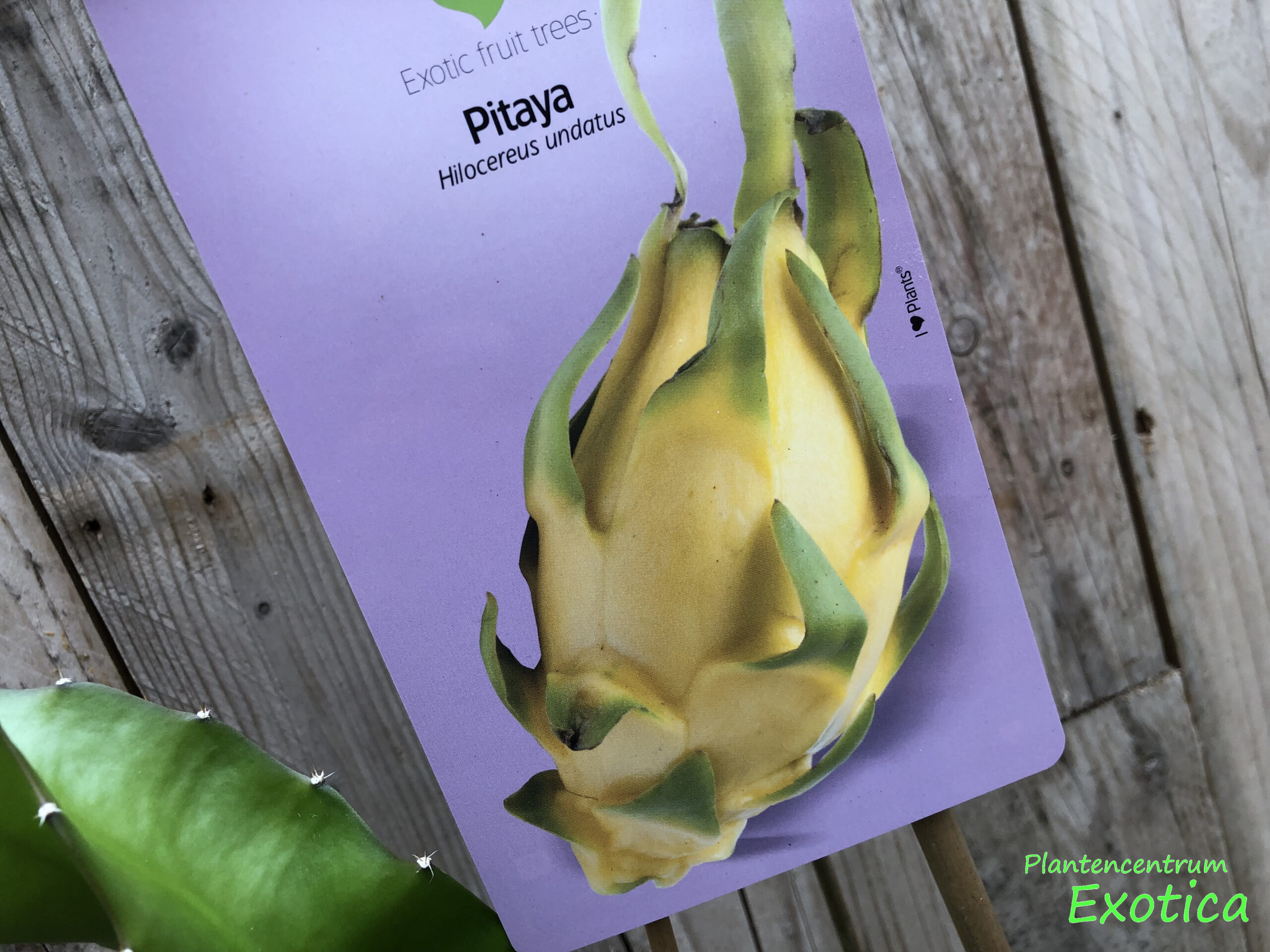
Pitahaya – Hylocereus megalanthus (Dragon fruit, Dragon fruit) (Yellow)
April 18, 2024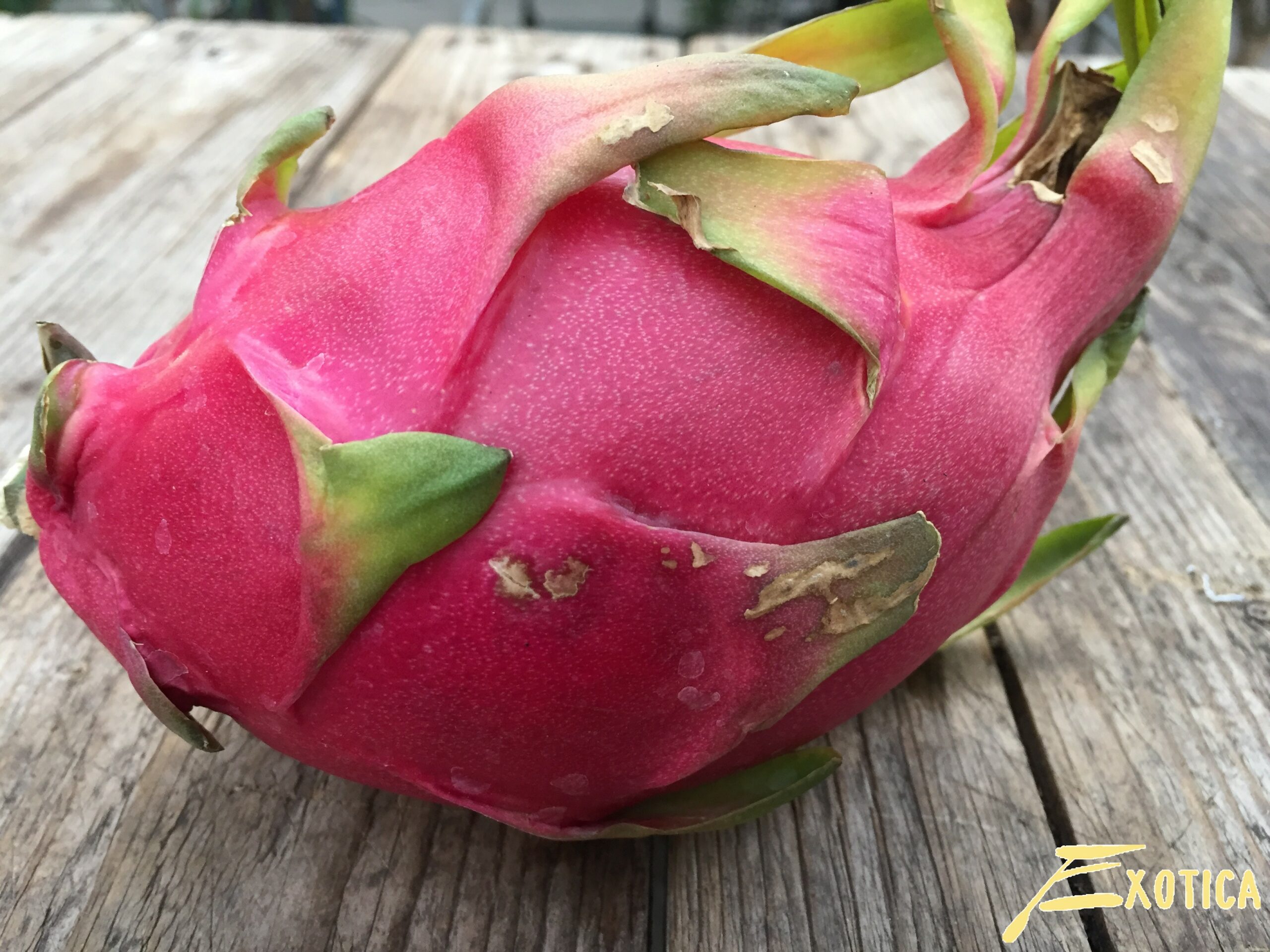
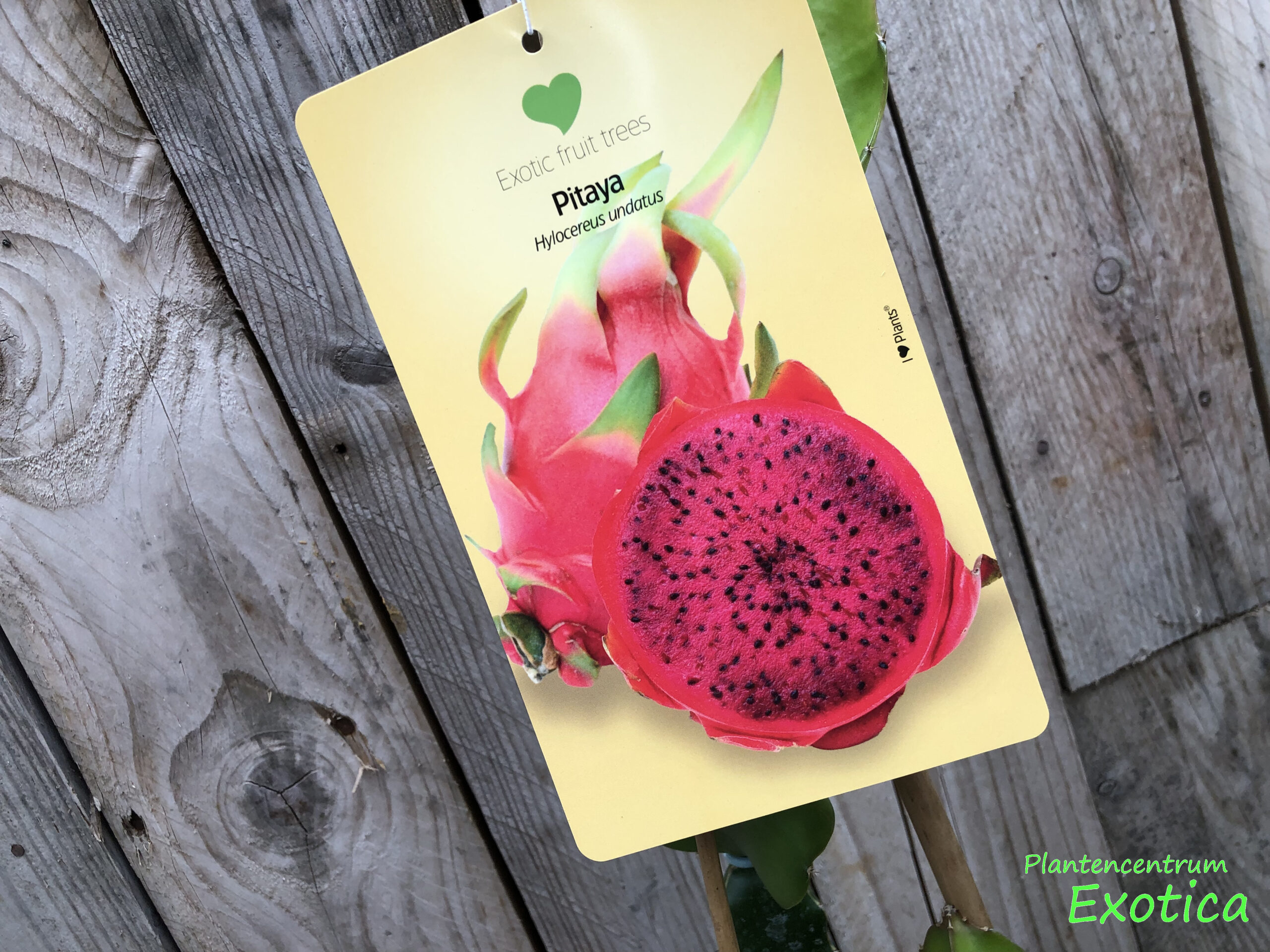
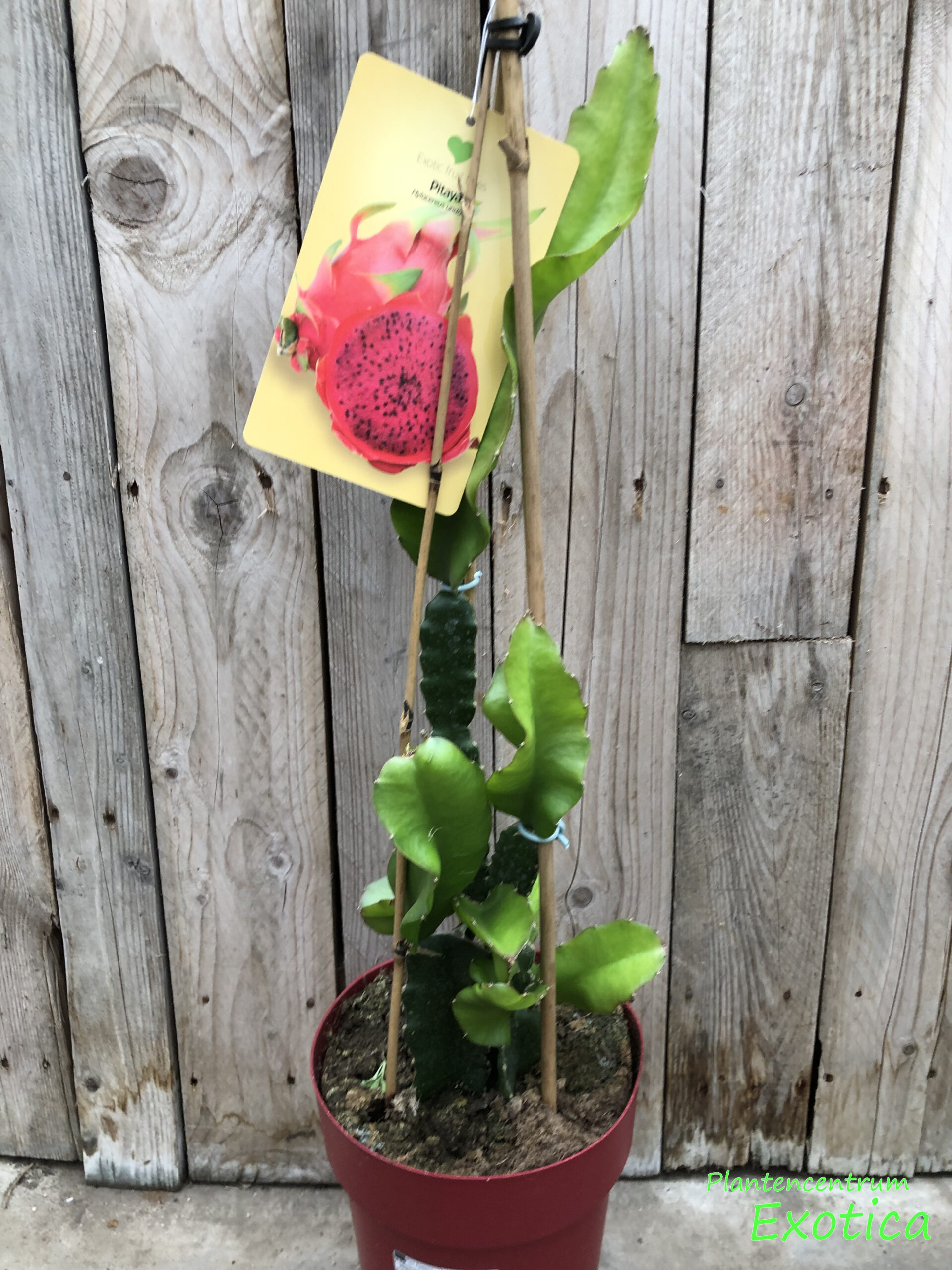
Pitahaya – Hylocereus Undatus (Dragon Fruit, Dragon Fruit) (Red Flesh)
| Min Temp : | +5°C |
| Position: | Sunny |
| Water requirements : | Medium to low |
| Flowering period : | Summer |
| Scented: | No |
| Edible: | Yes, fruit |
| Use : | Container / Houseplant |
| Evergreen: | Yes |
| Height: | Up to 1m, climbing or trailing |
Price range: €11.95 through €39.95
Hylocereus undatus is a terrestrial or epiphytic, creeping, climbing, or hanging, richly branched cactus with succulent, winged shoots up to 6 m long that attach to the substrate with aerial roots.
The flowers form on green, rounded flower shoots with fleshy, protruding scales surrounding the ovary. The flowers only open at night and are pollinated by bats.
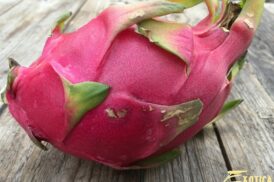
The fruits (known as pitaya) are thornless, fleshy, round or oval berries with a ripe pinkish-red skin featuring triangular scales up to 8 cm long. The pitayas grow up to 20 cm in size. The skin is 1 cm thick and encloses a fruit cavity filled with translucent white, juicy pulp containing many black seeds up to 3 mm in size.
Hylocereus undatus is native to southern Mexico and the west coast of Central America. The species is cultivated in tropical America and in parts of Africa, Asia (especially Thailand), and Australia.
Related products
-
Pitahaya – Hylocereus Undatus (Dragon Fruit, Dragon Fruit) (White Flesh)
Price range: €12.50 through €39.95