Schefflera alpina “Mountain Gem”
March 17, 2026
Grevillea robusta – Australian Silver Oak
March 19, 2026
Schefflera delavayi
| Min Temp : | Well hardy (-10/-15°C) |
| Location : | Sun (avoid midday sun) / Partial shade |
| Water requirements : | slightly damp |
| Flowering period : | Autumn |
| Scented : | No |
| Edible: | No |
| Use: | Container / Patio Plant / Open Ground |
| Evergreen: | Yes |
| Height : | 3-6m |
€44.95
Schefflera delavayi, also known as Delavay’s schefflera or Chinese umbrella tree, is a striking, evergreen shrub or small tree with large, palmate leaves and an exotic look, popular in shade and exotic gardens.
Origin
- Native to southwestern China (especially Yunnan and Sichuan), northern Myanmar (Burma) and adjacent parts of northern Vietnam.
- Grows naturally in subtropical mountain forests, moist valleys, canyons and undergrowth of mixed forests at altitudes of 1000–2800 meters.
- Adapted to cool, moist, shady conditions with high humidity and well-drained, humus-rich soils.
Care
- Grows as an upright, bushy shrub or small tree up to 3–6 metres high (often 2–4 m in cultivation) and wide; leaves large (up to 30–60 cm in diameter), palmate with 7–11 glossy, dark green leaflets, leathery and shiny.
- Prefers partial shade to shade (protected from bright midday sun); Full sun can scorch leaves in hot climates.
- Plant in moist but well-drained, humus-rich soil (neutral to slightly acidic, rich in organic matter such as leaf compost); Add mulch to retain moisture.
- Watering: regular and abundant in growing season (spring/summer) to keep soil consistently moist; moderate in winter; Does not tolerate dehydration or prolonged wet feet.
- Winter hardiness: very good for a Schefflera (USDA zones 8–10); tolerates frost down to about -10 to -12 °C (sometimes down to -15 °C with protection); In colder climates (such as the Netherlands), protect with mulch, fleece or overwinter as a container plant frost-free (cool but frost-free, 0–10 °C, light spot).
- Fertilization: light organic fertilizer or slow-release fertilizer during the growing season; Do not over-fertilize.
- Pruning: light in spring to maintain shape or remove damaged branches; tolerates pruning well and can become bushier.
Usage
- Mainly ornamental plant (ornamental): highly prized for its large, exotic, palmate leaves and tropical appearance; Perfect as an accent in shade gardens, jungle gardens, exotic borders or as a container plant on the terrace/patio.
- Combines well with ferns, hostas, rhododendrons and other large foliage plants; Provides structure and texture in semi-shaded areas.
| Weight | N/A |
|---|
Related products
-
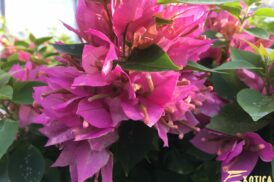
Bougainvillea Mini Thai
€21.25 -
Ipomoea Simplex
€22.50