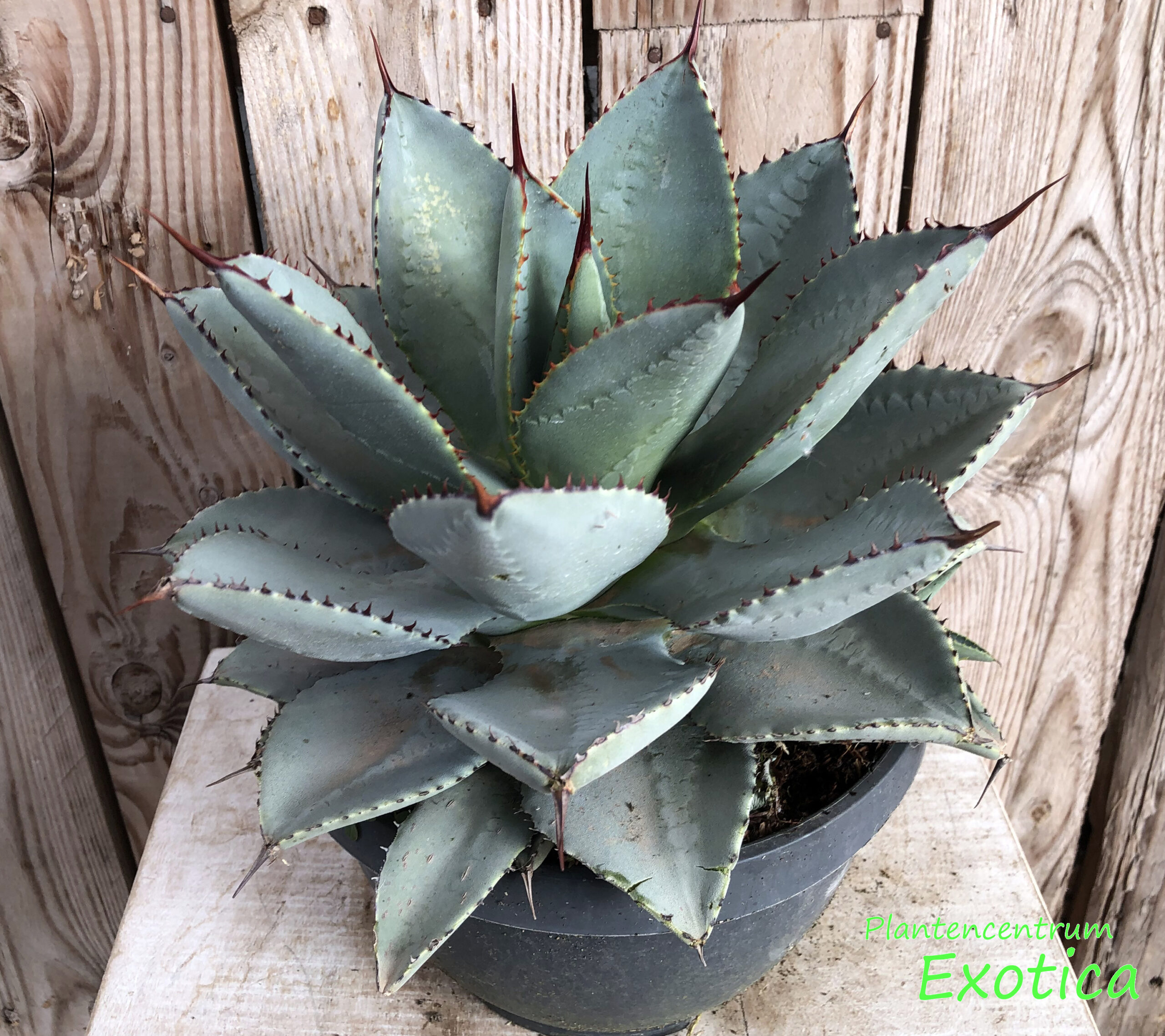
Agave Parrasana
March 31, 2025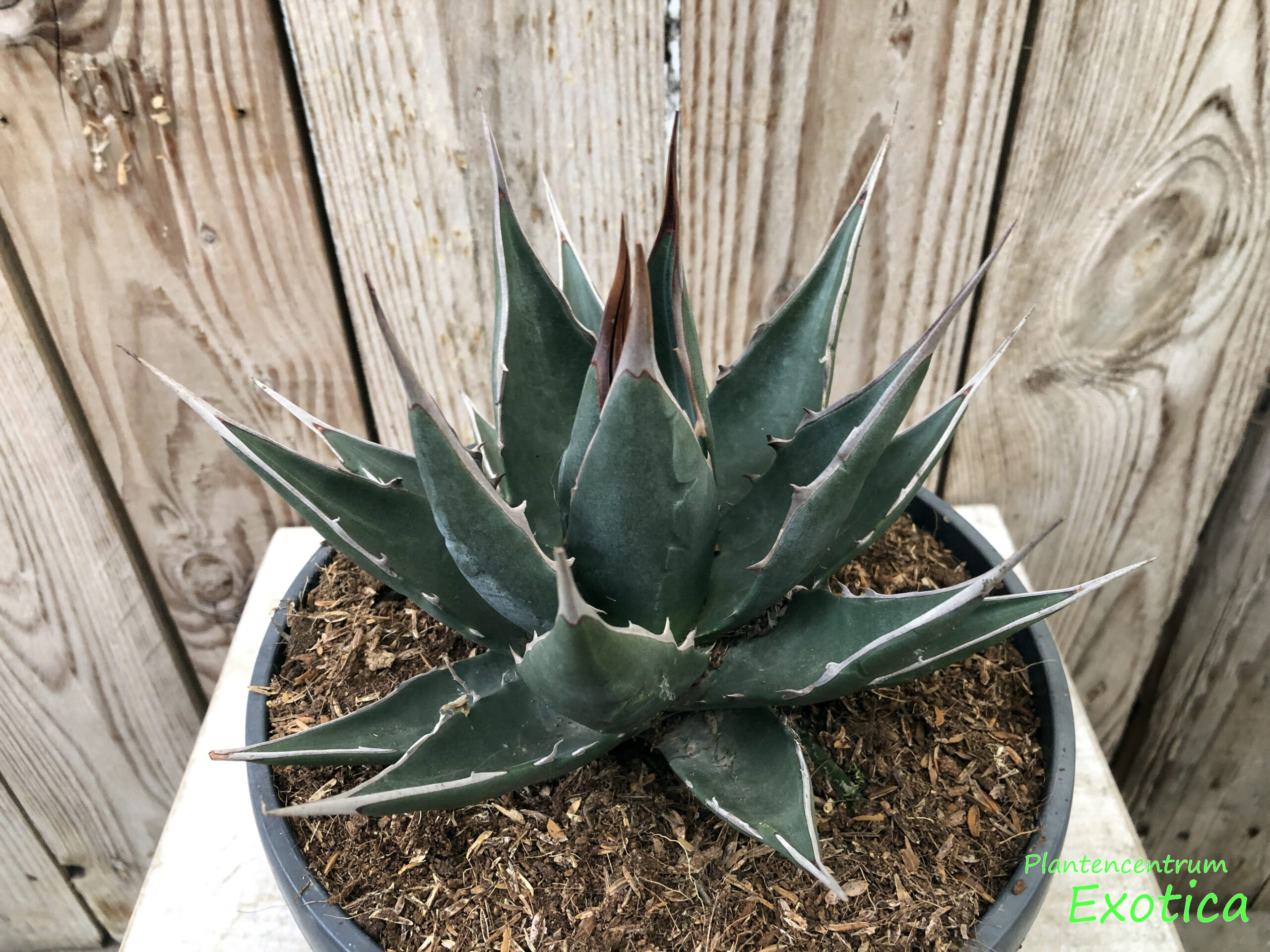
Agave Utahensis
March 31, 2025

Agave Titanota Black&Blue
| Min Temp : | -7°C |
| Pitch: | Sunny |
| Water requirements : | Limited, well-drained |
| Flowering period : | – |
| Scented : | No |
| Edible: | No |
| Use: | Container / Patio plant |
| Evergreen: | Yes |
| Height: | Up to 0.5m |
€29.95
Agave titanota ‘Black & Blue’, also known as Black and Blue Agave, is a dramatic, compact cultivar of Agave titanota with striking color contrast: smoke blue-gray leaves with thick, almost black to dark chocolate teeth and spines at the edges.
Origin
- This is a selected cultivar of Agave titanota, which occurs naturally in Mexico, specifically in the dry highlands of Oaxaca.
- Selected by grower Kelly Griffin from seed collected in Oaxaca;
- The wild species grows on rocky slopes, limestone cliffs and dry grasslands at 1200–2400 meters altitude; adapted to extreme drought, heat and frost.
- ‘Black & Blue’ is a modern selection for more intense colour (bluer leaves and darker teeth); a collector’s favorite among succulent lovers.
Care
- Grows slowly into a compact, solitary or lightly pupping rosette of about 30–60 cm high and 60–90 cm wide; leaves broad, short, thick, grey-blue with black marginal teeth and a long terminal spine.
- Prefers full sun colors intensify in bright sunlight; Light partial shade possible but full sun gives the best contrast.
- Plant in very well-drained soil (sandy-gravelly, cactus/succulent mix with pumice or perlite); pH neutral to slightly alkaline; Avoid heavy clay or wet feet (root rot risk).
- Watering: extremely drought tolerant; soak-and-dry method — allowing soil to dry completely between waterings; keep sparingly in the growing season (spring/summer), keep almost dry in winter; Overwatering is fatal.
- Winter hardiness: good (USDA zones 8b–11); tolerates frost down to about -4 to -10 °C (sometimes down to -12 °C in dry conditions); in colder climates (such as the Netherlands) as a container plant to overwinter frost-free or mulch heavily.
- Fertilization: little to none; in case of emergency in spring, a low dose of diluted cactus fertilizer; avoid over-fertilization.
- Pruning: remove only dead leaves; Wear gloves and protective clothing .
Usage
- Mainly ornamental plant (ornamental): prized for architectural form, dramatic blue-black contrast and sculptural leaves; Perfect for drought-resistant gardens, rock gardens, borders, containers, succulent gardens or as a collector’s item/focal point.
- Attracts attention in xeriscape and desert landscapes; after many years (20–30+) produces a tall flowering stem (up to 3–5 m) with yellow flowers; Mother plant dies afterwards.
| Weight | N/A |
|---|
Related products
-
Agave Americana Blue
€14.95