Agave Titanota Black&Blue
March 31, 2025
Jubaea Chilensis – Chilean wine palm
April 6, 2025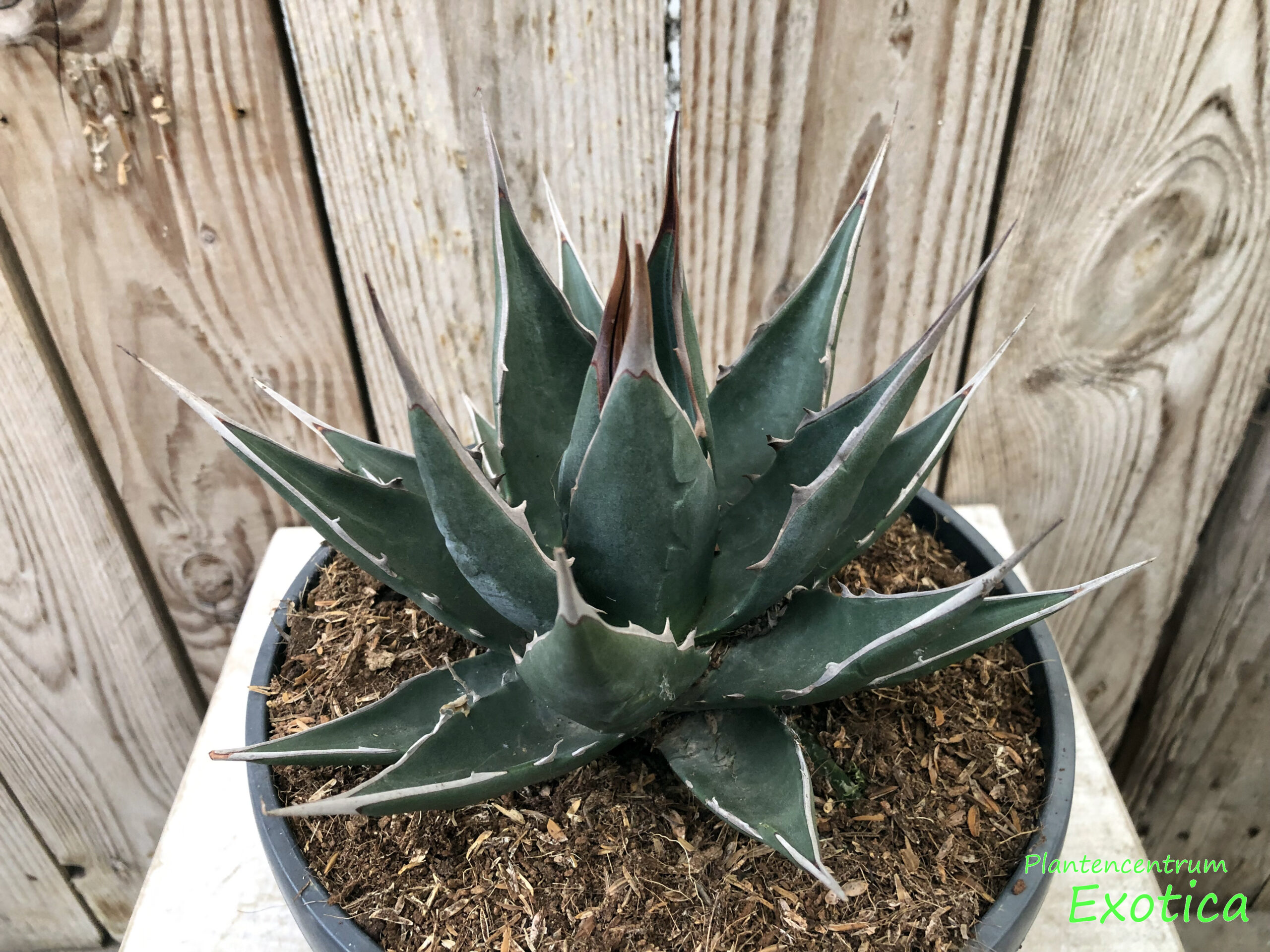
Agave Utahensis
| Min Temp : | -15°/-18°C |
| Pitch: | Sunny |
| Water requirements : | Limited, well-drained |
| Flowering period : | – |
| Scented : | No |
| Edible: | No |
| Use: | Container / Patio plant |
| Evergreen: | Yes |
| Height: | Up to 0.5m |
€29.95
Agave utahensis ( Grand Canyon Century Plant)
Origin:
-
- Endemic to the southwestern United States: states of Utah, Arizona, Nevada and California.
- Grows naturally on calcareous rocky slopes, canyons, desert scrub, pinyon-juniper forests and conifer wood at an altitude of 600–2,500 m; often in small pockets with fertile soil between limestone.
- The northernmost agave species in the world; used for more than 7,000 years by indigenous peoples (including Havasupai, Navajo)
- Care:
- Compact rosette of 30–90 cm wide and 20–40 cm high with blue-grey, narrow, upwardly curved leaves with sharp teeth and long black terminal thorn; slow growing (20–30+ years to flowering).
- Requires full sun to partial shade; extremely well-drained, lean, rocky/sandy/calcareous soil (no clay!); Drainage is crucial.
- Highly drought-tolerant and cold-resistant: the most hardy agave (USDA zone 6–10, survives snow and -15 to -18 °C in dry conditions); Water only when the soil is completely dry, keep almost completely dry in winter.
- Low maintenance: minimal fertilization, ideal for xeriscape, rock gardens, coastal gardens or pots; In pots or indoors, provide extra light for optimal growth.
- Usage:
- Mainly as an ornamental plant: beautiful architectural accent plant with symmetrical rosettes and blue-grey leaves; Perfect for dry gardens, rock gardens, containers, or Mediterranean/Xeric landscapes in colder climates.
Related products
-
Agave Mediopicta
€19.95 -
Agave Gentry
€29.95