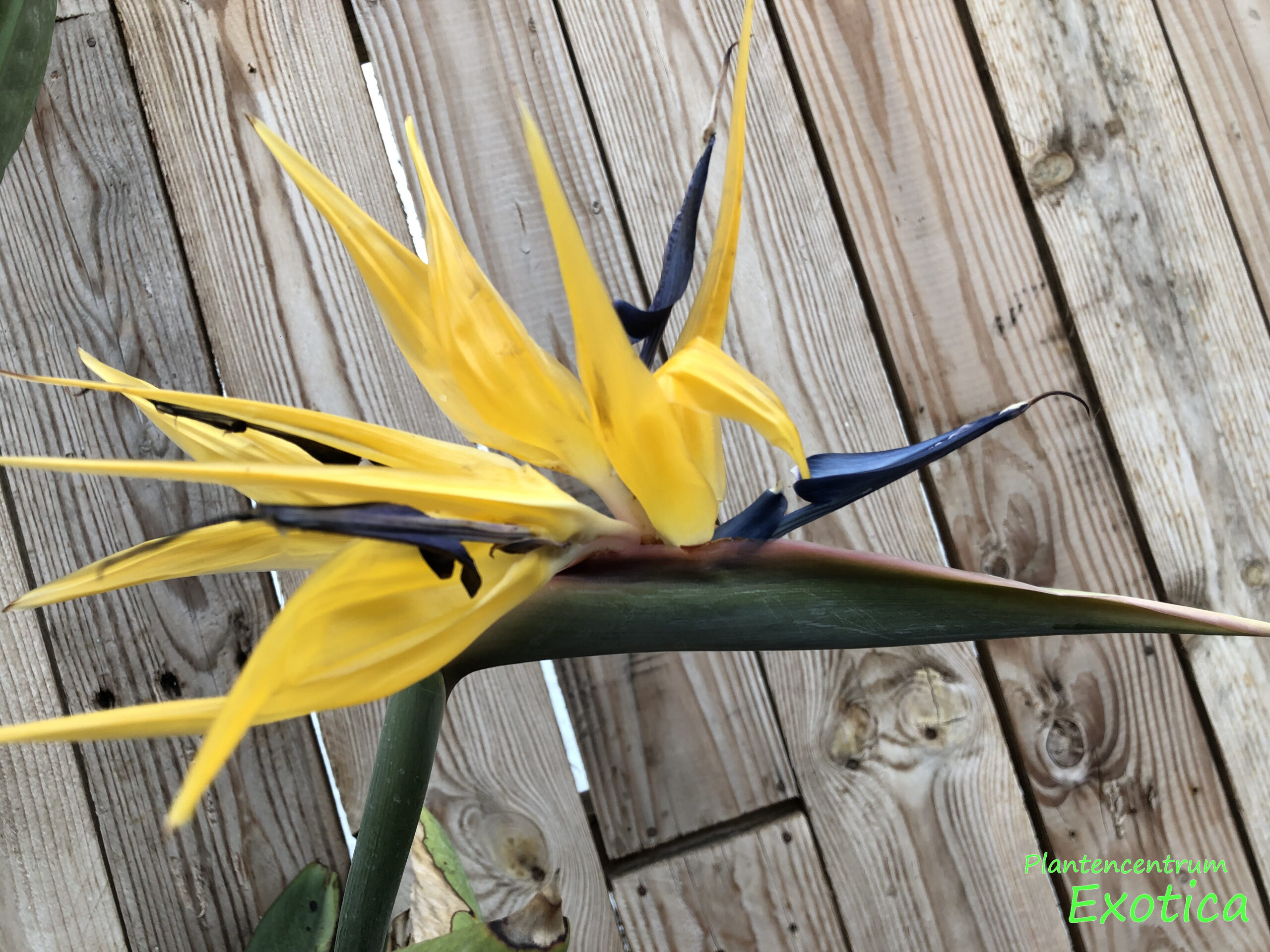
Strelitzia Reginae Mandela’s Gold
August 22, 2016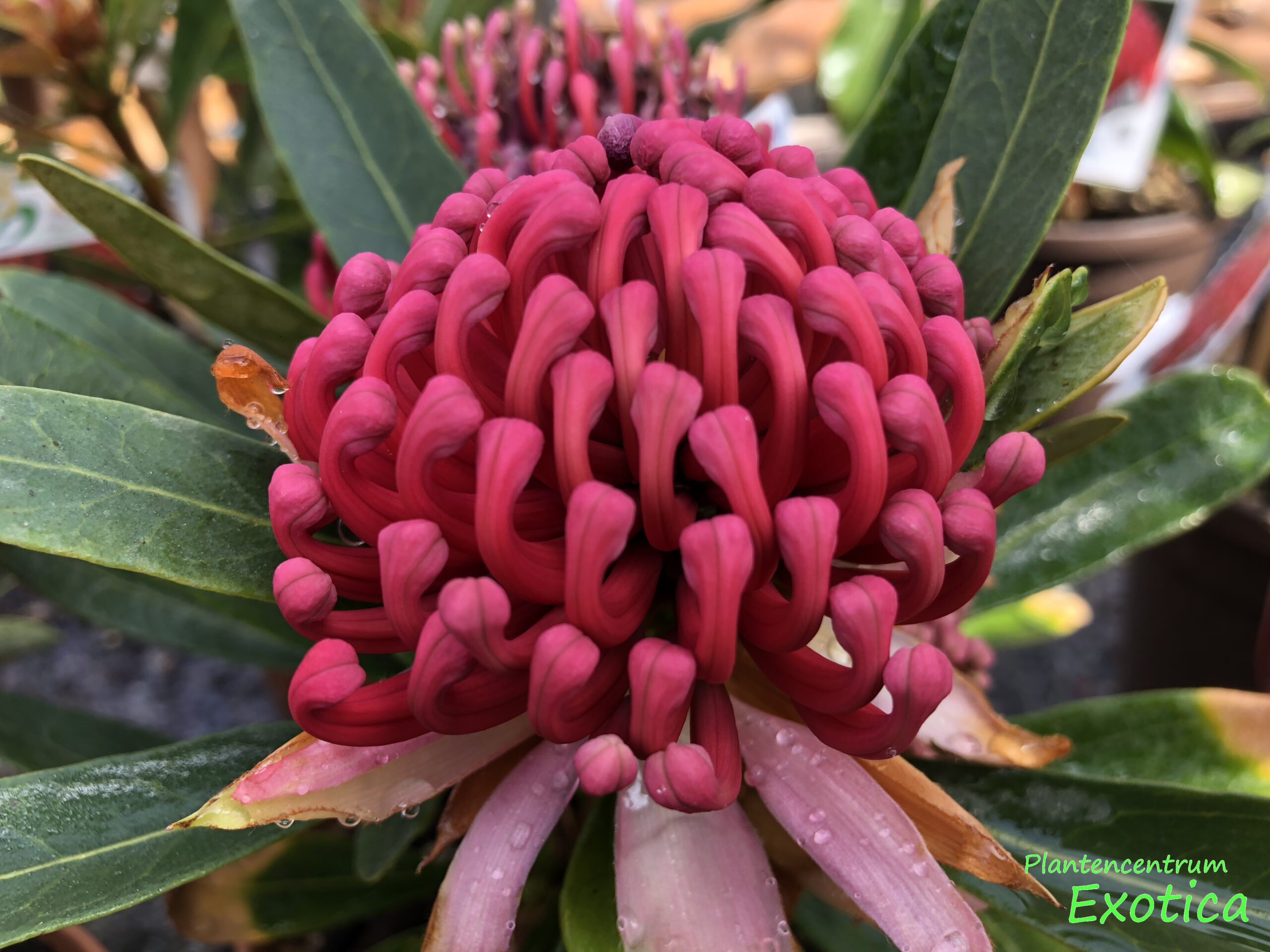
Telopea Braidwood Brilliant
February 5, 2017

Telopea Shady Lady White (speciosissima x oreades)
| Min Temp : | -7°C |
| Pitch: | Sunny / Partial shade |
| Water requirements : | Average |
| Flowering period : | 2-4 |
| Scented : | No |
| Edible: | No |
| Use: | Tub / Terrace / Houseplant |
| Evergreen: | Yes |
| Height: | up to 2m |
€31.25
Telopea (also known as waratah or war tree), belongs to the Proteaceae family and is famous for its spectacular, large red (or sometimes pink/white) flower heads. The genus includes five species, all endemic to southeastern Australia.
Origin
- The genus Telopea is endemic to Australia and is only found on the east coast, from northern New South Wales to Tasmania.
- The best-known species, Telopea speciosissima (New South Wales Waratah), grows naturally in the coastal and mountain areas of central New South Wales.
- Other species: T. oreades (Victorian/Gippsland Waratah) in southeastern Victoria, T. truncata (Tasmanian Waratah) in Tasmania, T. mongaensis (Monga/Braidwood Waratah) in southeastern New South Wales, and T. aspera (Gibraltar Range Waratah) in northern New South Wales.
- Grows naturally in open forests, moist forests, rainforest edges, on sandy, acidic, well-drained soils with moderate to high precipitation. Adapted to periodic fires.
Care
- Prefers full sun to light partial shade (not deep shade). Open, well-ventilated location with protection from bright midday sun in hot climates.
- Plant in very well-drained, acidic soil (pH 5.5–6.5), sandy or poor soil with low phosphorus content, avoid heavy clay, rich compost or alkaline soil (phosphorus is often fatal to Proteaceae).
- Watering: regular during establishment, then moderately and deeply. Drought tolerant but do not allow to dry out, overwatering leads to root rot.
- Mulch with bark, gravel, or stone to keep roots cool, retain moisture, and suppress weeds, but avoid overly rich organic mulch.
- Fertilization: very little or none. Use only low-phosphorus, acidic fertilizer for native plants (or no phosphorus fertilizer). Too many nutrients (especially phosphorus) often kill the plant.
- Pruning: light after flowering for form, avoid heavy pruning for mature plants. With T. speciosissima often cut off 3/4 of the plant after flowering for bushy growth.
- Winter hardiness: moderately frost-resistant (up to about -5 to -8 °C, depending on species and location). Grow as a container plant in colder climates and overwinter frost-free.
- Extra tip: good air circulation prevents mold; Ideal for dry, sunny gardens or pots with poor, sour mix. It attracts birds and bees with nectar-rich flowers.
Related products
-
Alstroemeria Nicolas 50/60
€11.95 -
Temp product attributen
€11.50 -
Alstroemeria Serrant 80/90
€11.95